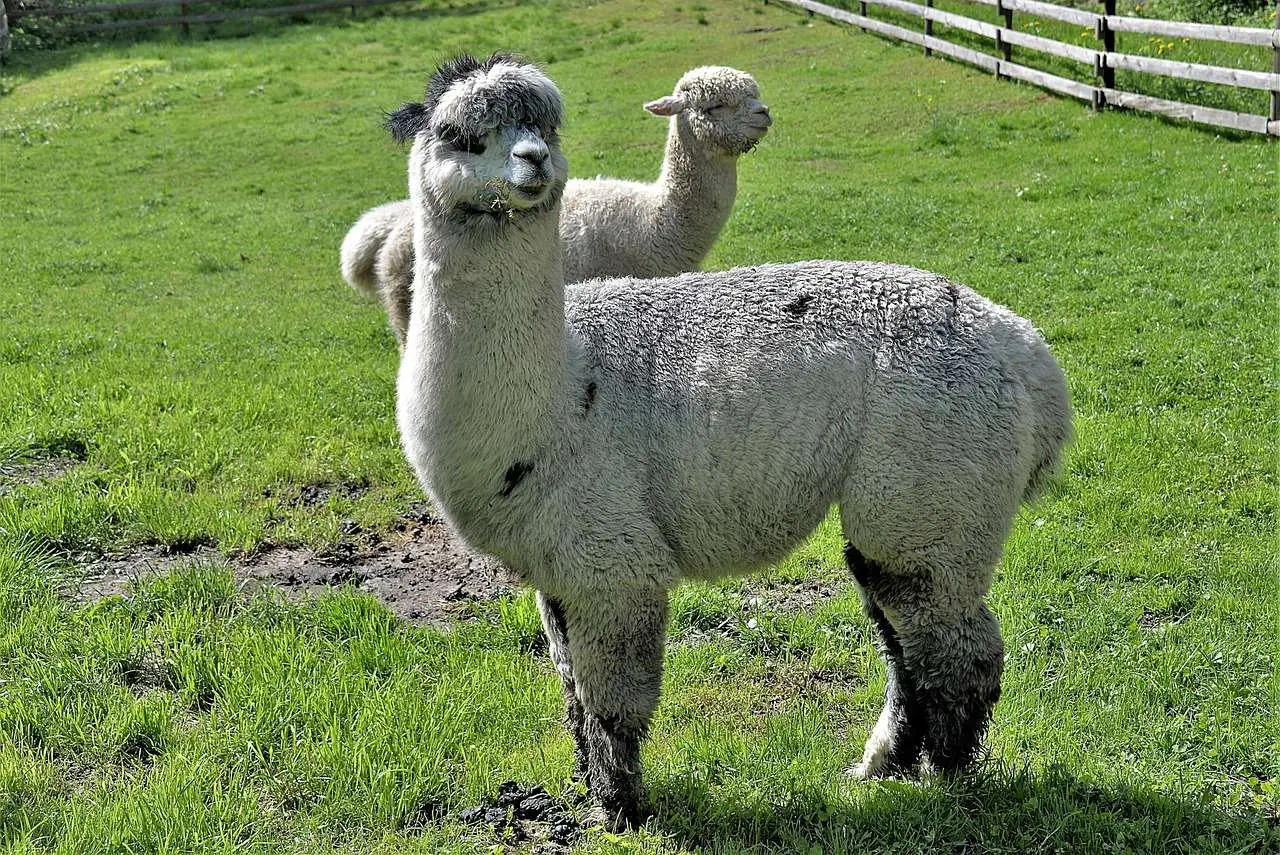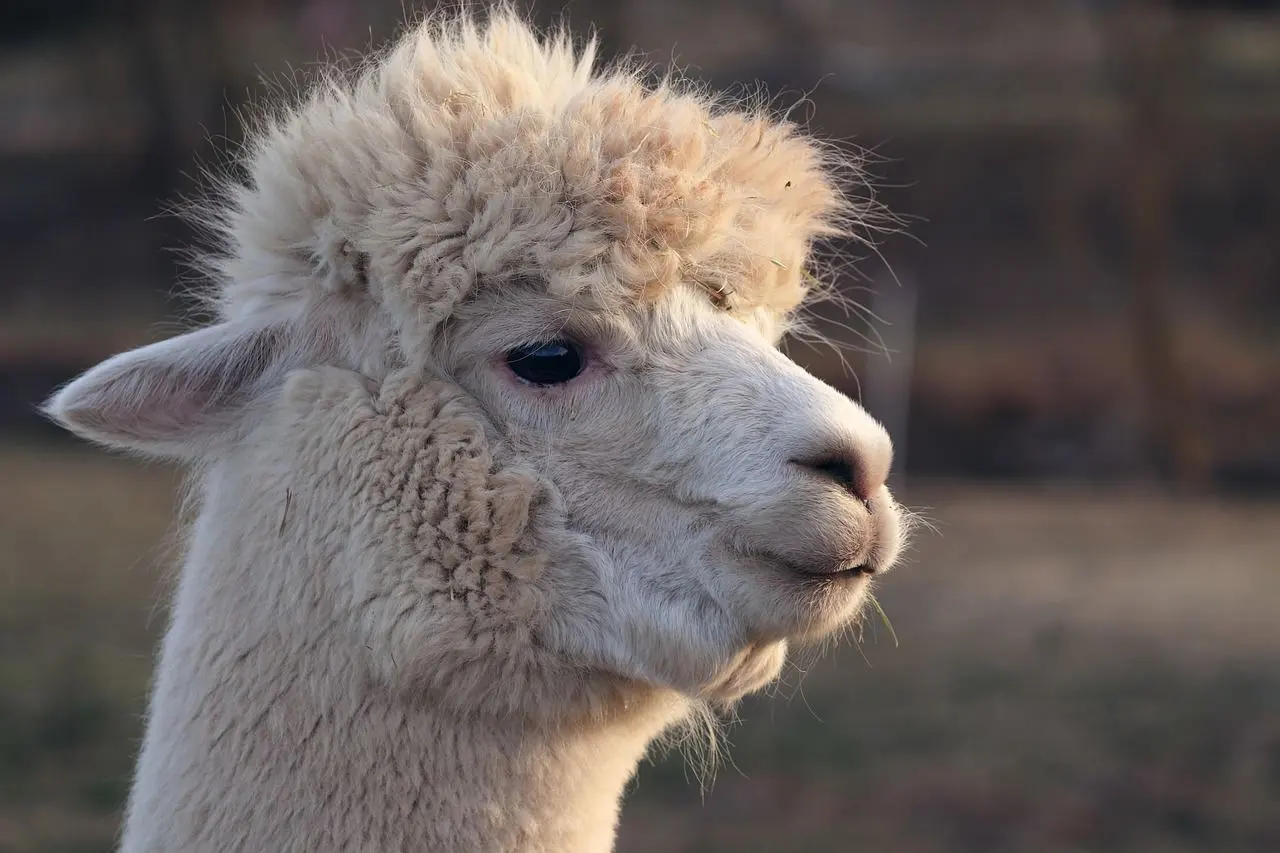

If you worry about alpaca heat stress as summer climbs, the short answer is: shear on time, give shade, airflow and fresh water, and handle animals only in cool hours. Call a camelid vet at the first warning sign.
This page is one part of the guide to alpaca care, so use it alongside the basics on feeding, shelter and routine health.
| Item | Value |
|---|---|
| Reference body temperature range | 99°F to 101.8°F (37.2°C to 38.8°C) |
| Body temperature in heat stress | above 102°F (38.9°C), as high as 107°F (41.7°C) |
| Heat Stress Index where handling is considered safe | less than 120 |
| Heat Stress Index where unnecessary handling should be avoided | 120-150 |
| Heat Stress Index where handling is considered dangerous | greater than 160 |
| Camelid thermal window | ventral thorax and abdomen |
These figures come from the MSD Veterinary Manual and a camelid herd-health review. They can change as guidance is revised, so check the sources before you rely on them.
Why alpacas are prone to heat stress
Alpacas are built for cool country. Tufts Cummings School of Veterinary Medicine explains that llamas and alpacas evolved at high altitude in South America, which leaves them with a limited capacity to cool themselves when temperatures rise.
A herd-health review in Veterinary Clinics of North America makes a similar point: camelids are adapted to cool, dry winters and mild, dry summers, which makes parts of North America a challenge. It also calls heat stress a major health concern in the southern United States.
Heat is not the only factor. The MSD Veterinary Manual links heavy fiber coats, high temperature and high humidity to the condition. It adds that these can also raise the risk:
- Subclinical disease
- Stress
- Obesity
- Overcrowding
In practice, a fleecy, overweight alpaca in a crowded, airless paddock on a muggy day is the textbook high-risk animal.
Signs of alpaca heat stress
Alpacas tend to hide discomfort, so learn what normal looks like for each animal and watch for small shifts. The sources describe the warning signs in three tiers:
- Common signs: Tufts lists lethargy, increased respiratory and heart rate, nostril-flaring, a drooping bottom lip and elevated body temperature.
- Added signs: UC ANR adds stiff or uncoordinated movements, open-mouth breathing, drooling and loss of appetite.
- Severe signs: the MSD Veterinary Manual names shaking, foaming at the mouth, collapse and coma.
The same manual gives body temperature as a key finding for veterinarians. It puts the reference range at 99°F to 101.8°F, while an affected animal may read above 102°F and as high as 107°F.
Because the manual calls heat stress an emergency, do not wait to see whether signs fade. Treat any of them in hot, humid weather as a reason to phone your vet.
Does shearing really help?
Every source here points the same way. Tufts says it is vital to shear the animals or at least clip the fiber on the belly and chest, and the MSD manual says animals should be sheared in warm weather and acclimated slowly to warmer environments. UC ANR adds that llamas and alpacas both must be shorn yearly.
A study on this exact question was published in Small Ruminant Research. Eight mature male alpacas in east central Alabama were split into two groups and kept outdoors with artificial shade from June through August, and one group was sheared to within 2 cm of the skin.
Sheared alpacas tended to have lower rectal temperatures in high heat than non-sheared ones (P = 0.06), and scrotal surface temperatures were cooler (P = 0.05). With only eight animals, read this as supportive evidence rather than proof.
Clipping also makes sense anatomically. The herd-health review identifies the camelid thermal window as the ventral thorax and abdomen, which is why belly and chest are the first areas to clip if you cannot shear the whole animal. You can read the details in the review itself.
Shade, airflow and housing that stay cool
The herd-health review calls shelter that provides shade, ventilation and wind protection a must for camelids. Tufts adds that shade should remain shady the whole day, which rules out a patch of shadow that moves away by afternoon.
Based on that review and the other sources, a summer-ready setup usually includes:
- Shade that lasts through the day, not just the morning
- Air flow, with fans or misting devices where heat is persistent
- Sand, concrete or open pasture under shade as flooring or ground
- Shelters large enough, with wide enough openings, that the young, old or thin animals can enter without harassment
- Wading pools in the paddock, as Tufts suggests, or the deep pools the MSD manual lists as helpful
Bedding matters more than many owners expect. According to the review, summer straw bedding closes the thermal window and blocks heat dissipation, even though straw suits cold winters.
Pregnant females need earlier planning. The review recommends no pasture rotation or housing changes after 8 months of gestation, so set up shade and airflow before the late stage, and see the alpaca gestation period guide for how the timeline runs.
Water, handling and timing
Fresh drinking water must always be available, according to Tufts. UC ANR gives a baseline of about 1 gallon per hundred pounds of animal weight each day.
Tufts also suggests spraying legs and bellies with water. The MSD manual, however, warns that unshorn animals should not be soaked, because the fiber traps water and holds in heat.
Timing is the other lever. Tufts recommends limiting handling and required transportation to the coolest part of the day, and the MSD manual says veterinary procedures belong in the cool hours too. It also says sedated animals should never be left untended outdoors.
The herd-health review offers a simple Heat Stress Index (HSI), which is the humidity percentage added to the temperature in °F. Its guidance reads:
- Less than 120: handling is considered safe.
- 120-150: unnecessary handling should be avoided.
- Greater than 160: handling is considered dangerous and animals should be closely monitored.
The review does not label the gap between the middle and top bands, so treat readings near the top of the middle band with extra caution.
What should you do if you suspect heat stress?
UC ANR advises hosing the animal down, moving it to a cool area and then calling your veterinarian. Because the MSD manual cautions against soaking unshorn animals, the sources differ in detail, which is a good reason to phone a veterinarian experienced with camelids straight away for instructions.
The urgency is real. The MSD Veterinary Manual notes that many cases are advanced by the time they are recognized, and that many affected animals decompensate and die within 24 to 72 hours despite initially showing improvement.
For untreated animals, it lists liver and renal failure, intestinal sloughing, multisystem organ failure and death. An alpaca that seems to perk up still needs a veterinary check.
Heat stress is one of several summer and year-round risks. The guide to common alpaca health problems puts it in context, but this page is general husbandry information and not veterinary advice. Diagnosis, medication and emergencies belong with your vet.
Frequently asked questions
Do alpacas need shearing every year?
Show answer
UC ANR states that both llamas and alpacas must be shorn yearly, and the MSD manual says to shear in warm weather. Timing it ahead of the hottest months gives the animal the benefit when it counts. Ask a camelid vet or an experienced shearer about timing for your climate.
What air temperature is too hot for alpacas?
Show answer
The supplied sources give no single air temperature. The herd-health review instead adds humidity and temperature together, treating totals under 120 as safe for handling and totals over 160 as dangerous.
Is it safe to hose an alpaca to cool it down?
Show answer
Tufts supports spraying the legs and belly, and UC ANR lists hosing down as a first step before calling the vet. The MSD manual warns that a full soaking of an unshorn animal can backfire. When unsure, ask your veterinarian.
Is alpaca heat stress an emergency?
Show answer
Yes. The MSD manual describes the condition as an emergency, so contact a veterinarian experienced with camelids as soon as you see signs such as open-mouth breathing, collapse or a drooping bottom lip.