
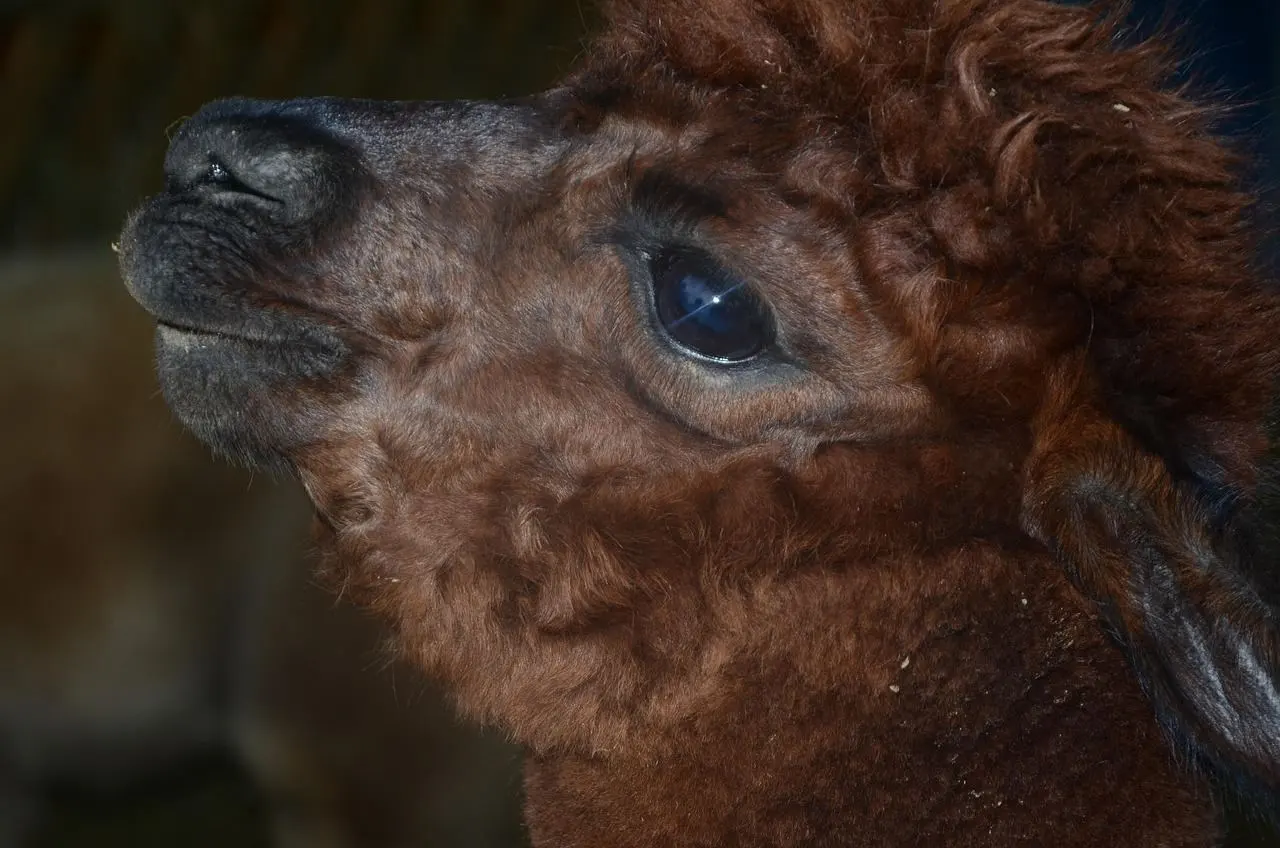
Been caught in the crossfire, or just nervous about the friendly face at the fence? Why do alpacas spit? Mostly to settle disputes with other alpacas over food, space, and rank; people are rarely the intended target.
Spitting is one piece of alpaca behavior covered in the guide to alpaca breeds.
| Item | Value |
|---|---|
| Reported maximum spit distance | Up to 10m |
| What the spit contains | Regurgitated stomach contents |
| Usual targets | Other alpacas; humans only rarely |
| Early warning signs | Ears flattened back, chin tipped back |
| Individuals most likely to spit | The grumpier ones |
These figures come from Discover Wildlife and the Cooperative Extension camelid welfare FAQs. Distances and behavior vary from animal to animal, so check the sources before you rely on them.
What alpaca spit is made of
Alpaca spit is more than saliva. Discover Wildlife describes a defensive mechanism in which the animal regurgitates its stomach contents and propels the mixture up to 10m.
For whoever is on the receiving end, the same explainer says the result is a foul-smelling mixture of gastric juice and undigested plant material. That is a strong reason to learn the warning signs early.
A New Zealand alpaca keeper writing in Our Way of Life splits the habit into “good” and “bad” spit. Bad spit is fermented stomach contents, while good spit has only got as far as the mouth.
According to the same column, alpacas tend to start with the mouth-only version because it is closer to the exit. They reach for the stomach contents if the rival does not back down.
Why alpacas spit at each other
Spitting is mainly a message to other alpacas. The Cooperative Extension camelid welfare FAQs say alpacas and llamas use it among themselves for three jobs:
- diverting bothersome suitors;
- protecting themselves from a threat;
- helping to establish dominance over other animals.
Discover Wildlife gives concrete examples: a female may spit at a male during the breeding season to repel his advances. An alpaca may also warn a herd member away if it thinks that animal is about to steal its food (Discover Wildlife).
Males add spitting to their repertoire of fighting moves when competing for females, according to the same source. Wikipedia notes that alpacas spit to show dominance when distressed, fearful, or agitated, and that male alpacas are more aggressive than females.
Personality matters too. Like people, alpacas differ in temperament, and the grumpier individuals are the most likely to spit, as Discover Wildlife puts it.
Food is the classic trigger
Feeding time is where many disputes start. In the Our Way of Life column, a person usually gets spat on because they are standing in the wrong place at the wrong time.
The side effect is almost comic: with their mouths open and dribbling, the squabbling pair cannot eat the pellets they were fighting over. A third alpaca nearby is often glad to take up the slack.
Warning signs before a spit
Spitters usually give notice. Discover Wildlife lists a typical sequence of signals:
- The animal flattens its ears back or aggressively puffs air from its nostrils.
- If the hint is missed, it tips its chin back while leaning forward.
- Within a second or two, the spit can follow.
Treat the tipped chin as your last chance to clear the area. Stepping out of the line between the two animals is usually enough.
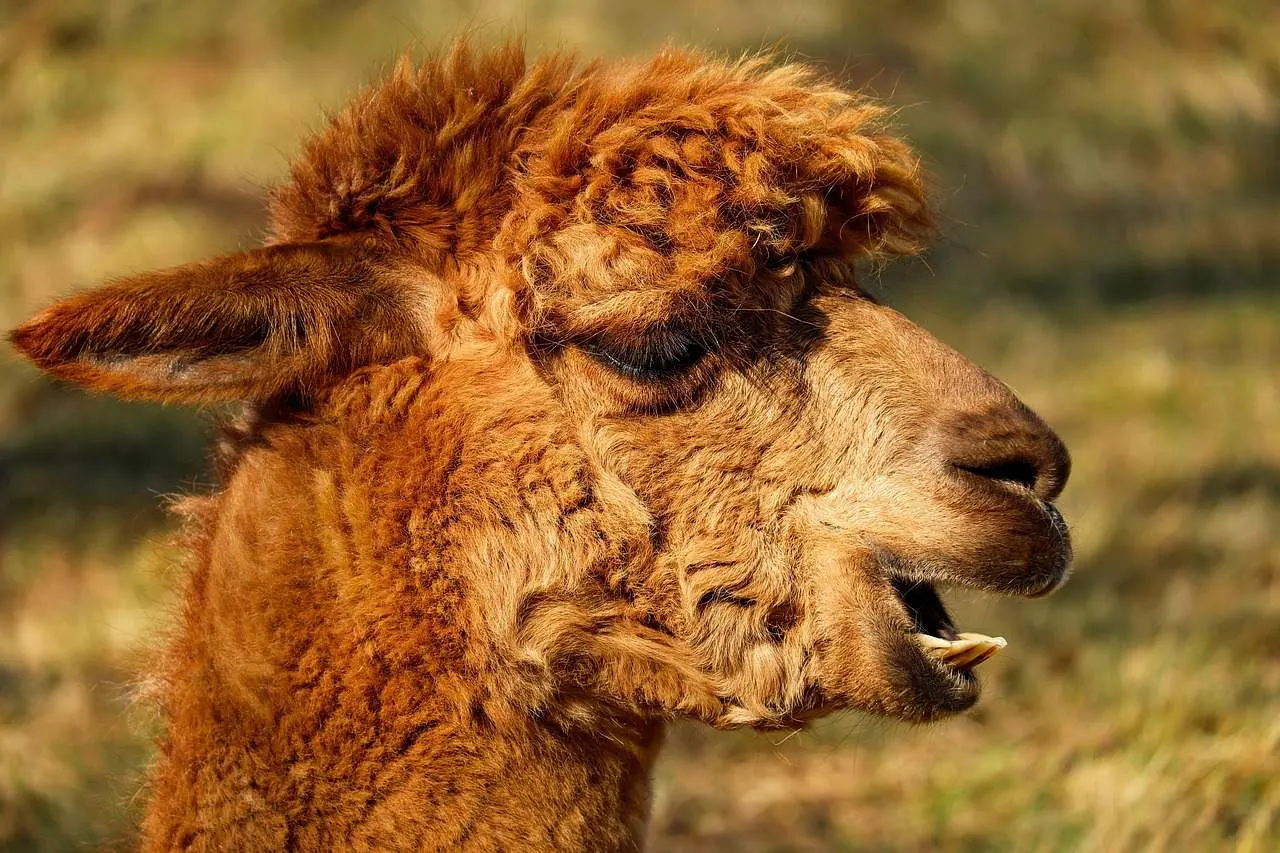
Spitting sits alongside a quieter vocabulary. Alpacas also communicate by ear, body and tail positions, shrill alarm calls, and a humming or low-pitched sound, per the Cooperative Extension FAQs, and the page on alpaca sounds humming covers the vocal side in more detail.
Do alpacas spit at people?
It happens, but not often. The Cooperative Extension camelid welfare FAQs call it rare and say an alpaca that is provoked or feels threatened may occasionally spit at humans.
Most human hits are collateral damage. The Our Way of Life column explains that the retaliatory spit is partly a reflex, and that an alpaca often does not turn to face its rival because doing so is more confrontational, so the spit lands on whoever is in front.
The same writer adds that sometimes alpacas spit at people on purpose, but that this is far less common.
Some animals call for extra care. Pregnant females or females with nursing young may be territorial, and intact males may show dominance, so the Extension FAQs recommend more experienced handlers for such animals.
For the wider story of how people and alpacas came to share paddocks at all, see the notes on alpaca history.
Lowering the odds of being spat on
You cannot remove spitting from an alpaca’s repertoire, but you can avoid being in the way. These habits follow from the sources above:
- Keep out of the space between two animals that are squaring up, especially near feed.
- Never walk into a paddock full of alpacas with only one container of food, as the Our Way of Life column warns.
- Move calmly and quietly, because the Cooperative Extension FAQs say llamas and alpacas respond best to calm and quiet handling.
- Step back the moment you see pinned ears, puffed nostrils, or a raised chin.
This is general husbandry information, not veterinary advice. For any health concern, medication, or emergency, consult a veterinarian experienced with camelids.
Frequently asked questions
How far can an alpaca spit?
Show answer
Discover Wildlife reports that the mixture can travel as far as 10m, though most spits are aimed at a nearby rival rather than at that limit (Discover Wildlife).
Do males or females spit more?
Show answer
Both do. Females may use it to turn away a male in breeding season, while males use it in contests over mates, and Wikipedia describes males as the more aggressive sex.
Does a spit mean the alpaca dislikes me?
Show answer
Usually not. Spit aimed at a person is rare according to the Cooperative Extension FAQs, and many hits come from standing in a rival’s line of fire.
Is spitting the only way alpacas show annoyance?
Show answer
No. Ear, body and tail positions, shrill alarm calls, and low-pitched sounds all carry messages, as the Cooperative Extension FAQs describe, and flattened ears often come before any spit.