Trying to tell alpaca breeds apart? There are just two: Huacaya, with crimped, fluffy fiber, and Suri, with long, silky locks. This overview covers how they look, behave and where they came from.
| Item | Value |
|---|---|
| Modern alpaca breeds | Two breeds (Huacaya and Suri) |
| Huacaya share of the alpaca population | 90 percent |
| Adult height at the withers | Between 81 and 99 centimetres (32 and 39 inches) |
| Domesticated | At least 5,000 to 6,000 years ago |
| Average gestation | 342 days |
The figures above come from Wikipedia’s alpaca entry and National Geographic’s alpaca profile. Population shares and measurements can change as new surveys appear, so check the sources before you rely on them.
Alpaca breeds: Huacaya and Suri
Every alpaca belongs to one of two modern breeds, the Huacaya and the Suri, separated by their region of endemism and their fiber type, according to Wikipedia’s alpaca entry. Both are the same species, so the difference lies mainly in the coat.
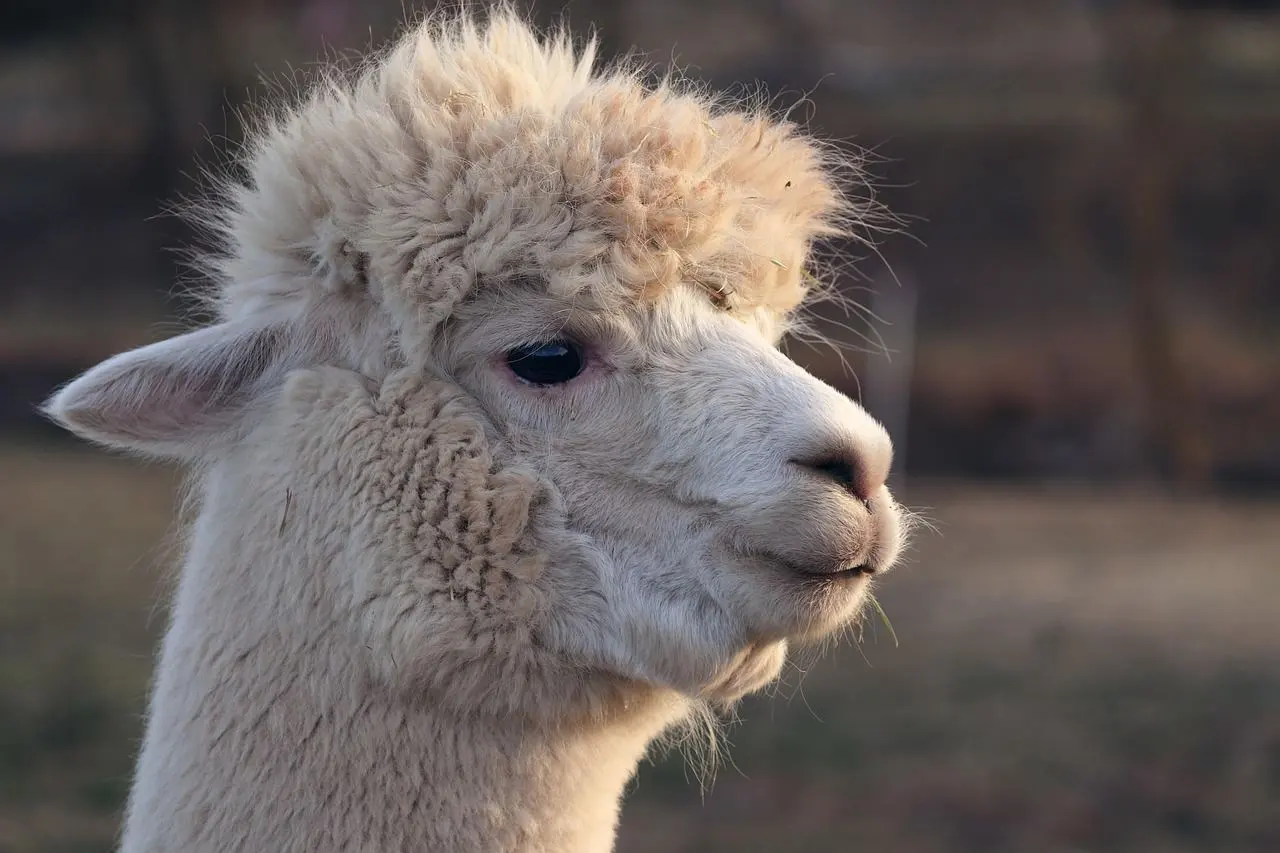
The Huacaya grows a dense, soft, crimpy fleece that makes the animal look fluffy, much like a sheep, as Wikipedia’s alpaca fiber entry explains. Its separate Huacaya entry describes the fiber as having a wavy and spongy look.
It is also by far the more common breed. National Geographic says the Huacaya makes up 90 percent of the alpaca population, with Suri alpacas accounting for the rest (National Geographic).
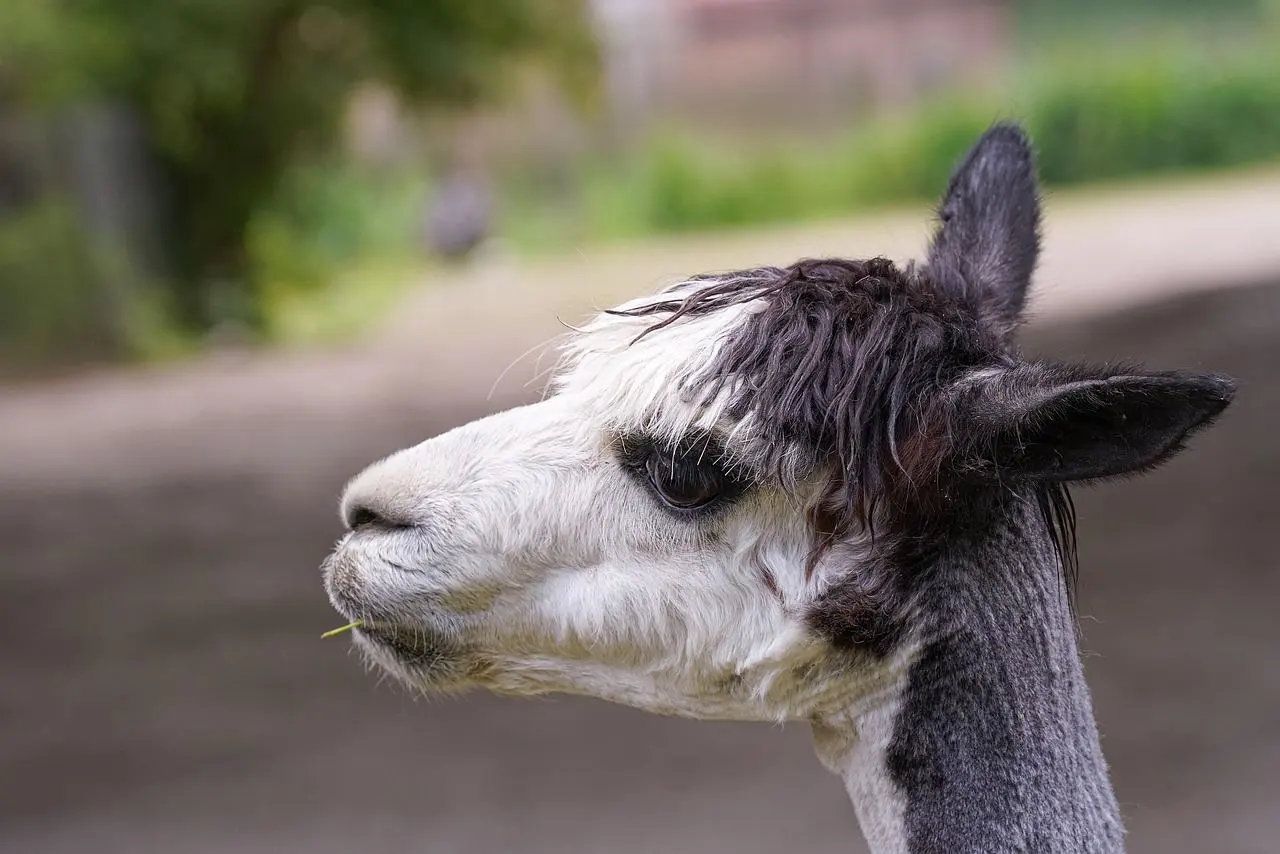
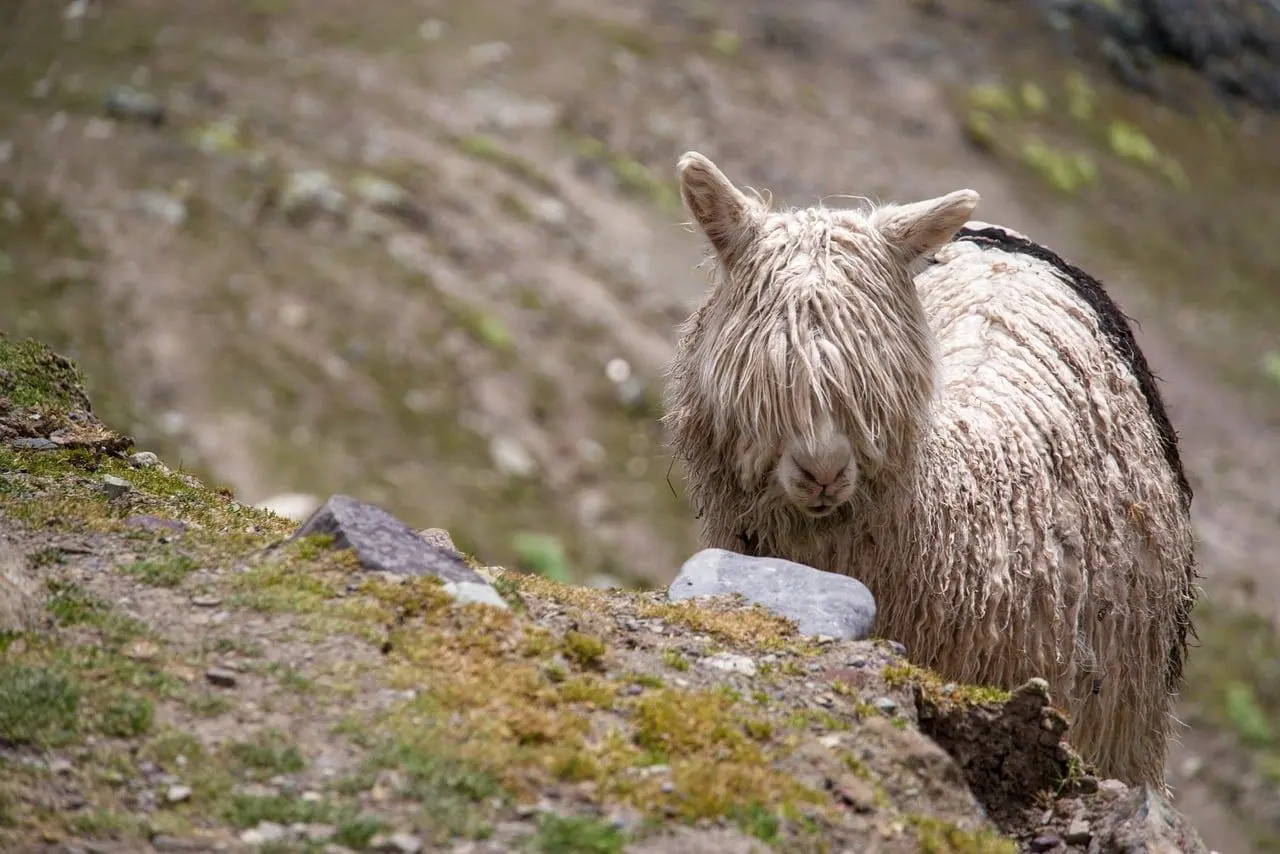
The Suri carries silky, pencil-like locks that hang from the body and resemble dreadlocks without matted fibers. The same alpaca fiber entry puts Suri at less than 10% of the South American alpaca population, but at an estimated 19-20% of the North American one.
Anyone weighing the two coats for fleece quality or use can read more in the guide to huacaya vs suri alpaca.
How the two breeds compare
Crimp is the clearest dividing line. Huacaya fiber has a natural crimp that makes an elastic yarn well suited to knitting, while Suri has no crimp and fits woven goods better.
| Feature | Huacaya | Suri |
|---|---|---|
| Fleece look | Dense, soft, crimpy and sheep-like | Silky, pencil-like locks |
| Crimp | Natural crimp | No crimp |
| Better suited to | Knitting | Woven goods |
| Share of South American alpacas | The large majority | Less than 10% |
| Cold hardiness | Often said to be hardier | Often said to be less cold hardy |
The comparison draws on Wikipedia’s alpaca fiber entry and its Huacaya entry. Shares and descriptions can change, so check the sources before you rely on them.
Rarity may have an old explanation. The alpaca fiber entry says the Suri is thought to be rarer most likely because the breed was reserved for royalty during Incan times, and that both breeds are successfully raised in more extreme climates despite the Suri being often said to be less cold hardy.
Beyond the coat, the breeds share a good deal, according to National Geographic:
- Shearing: both are typically sheared once a year in the spring or early summer, before it gets too hot.
- Colors: the species boasts 22 coat colors, including white, black, beige and many shades of brown and gray.
- Temperament: alpacas are described as gentle, docile animals.
What happens to the fleece after shearing, from carding to yarn, is covered in the alpaca fiber hub.
Where alpaca breeds come from
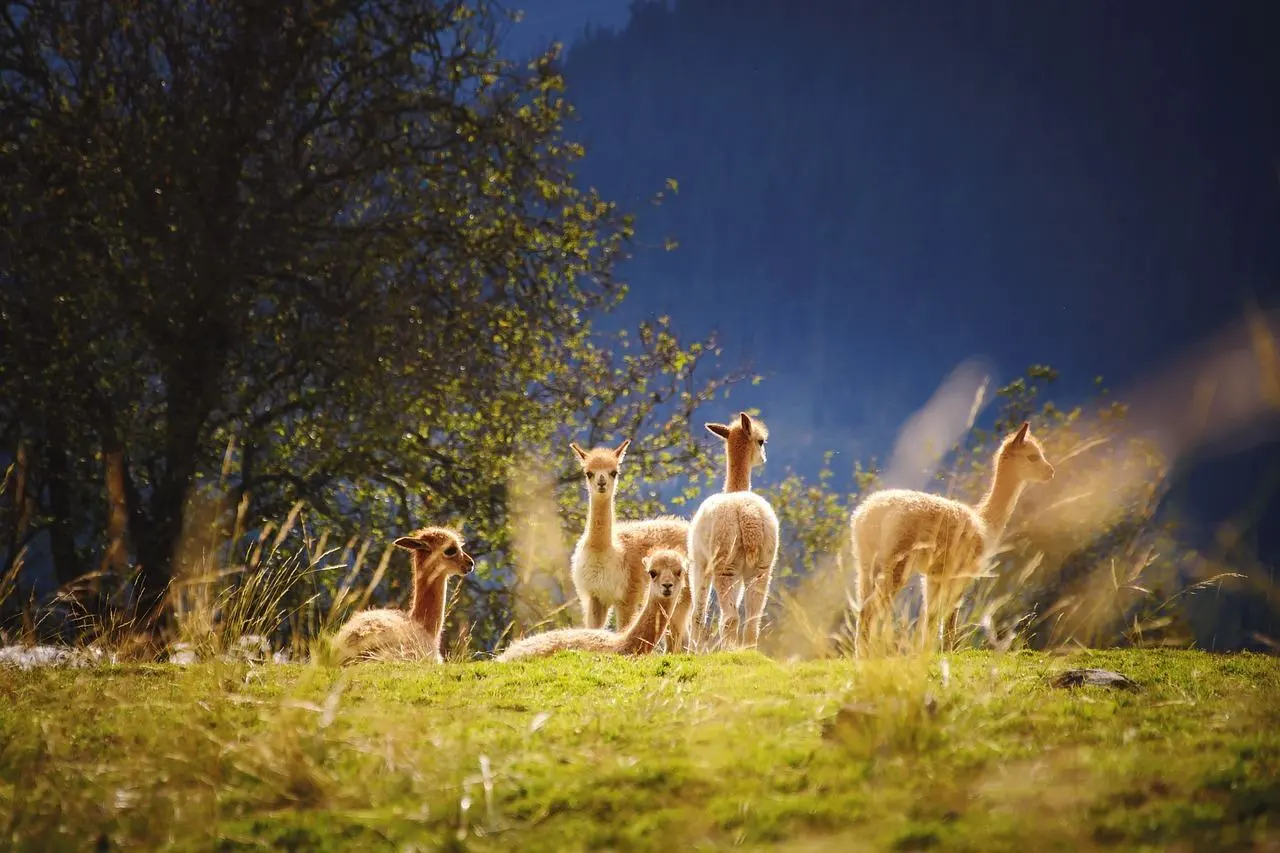
There are no known wild alpacas. The vicuña, a smaller, fine-haired relative native to South America, is the wild ancestor of the alpaca, according to Wikipedia.
The same Wikipedia entry says alpacas and llamas are believed to have been domesticated at least 5,000 to 6,000 years ago. National Geographic gives 6,000 years ago for domestication by the people of the Peruvian Andes.
The Huacaya entry credits the Incas with first domesticating both breeds from the vicuña. The alpaca entry adds that the Moche people of Northern Peru often used alpaca images in their art.
Their ancestry was long disputed. In 2001 the genus name changed from Lama pacos to Vicugna pacos after DNA work showed descent from the vicuña, not the guanaco, and microsatellite data likewise shows alpaca DNA is much more similar to vicuña DNA than to guanaco DNA (Wikipedia).
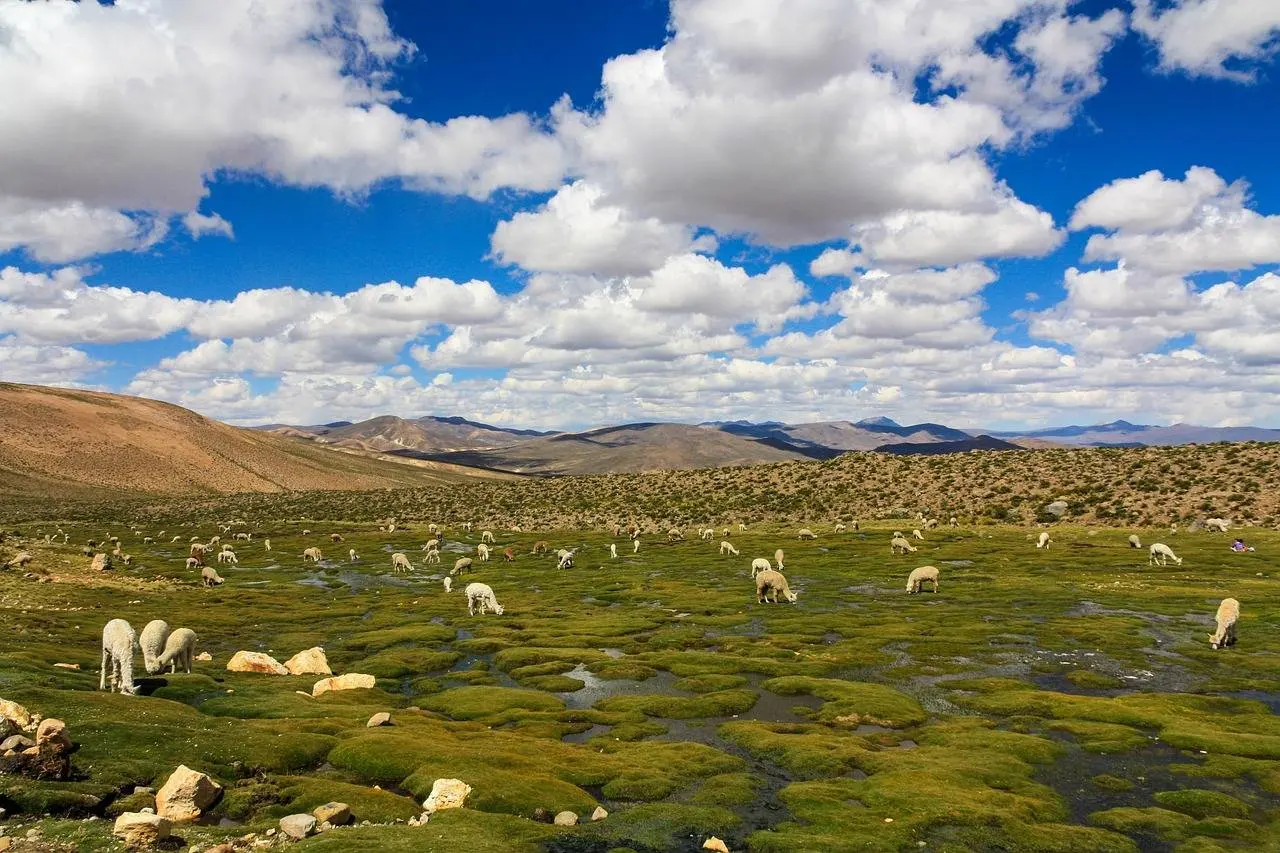
The traditional home range is the Andes, from Ecuador and Peru to Western Bolivia and Northern Chile, typically at an altitude of 3,500 to 5,000 metres (11,000 to 16,000 feet) above sea level (Wikipedia). The wider family goes back much further: Camelidae first appeared in the Americas 40-45 million years ago, according to the same entry.
For how alpacas sit among their relatives, see the overview of south american camelids. A few later dates show how the breeds spread:
- 16th century: during the Spanish invasion of South America, the alpaca population was cut down by 90 percent (National Geographic).
- 1980s: Huacaya were imported to countries including Australia, Canada, England, France, New Zealand and the United States to set up alpaca industries (Wikipedia).
- 1984: alpacas were imported from the Andes to the U.S. (National Geographic).
The longer arc, from Andean herders to farms around the world, is told in alpaca history.
How big are alpacas and how do they live?
Adults stand at a shoulder height of between 81 and 99 centimetres (32 and 39 inches) and usually weigh between 48 and 90 kilograms (106 and 198 pounds), according to Wikipedia.
Males and females look very alike. National Geographic notes that males are somewhat larger and have more prominent canine and incisor teeth, called fighting teeth or fangs.
Alpacas are strict grazers that eat the vegetation of the Andes (National Geographic). They only have incisors on the lower jaw, which grind food against a dental pad on the roof of the mouth (Wikipedia).
A pregnancy lasts 342 days on average, though it can run to just over a year, and the single cria walks shortly after birth. Pregnancy is not always obvious, even toward the end (National Geographic).
The practical side of keeping alpacas, from feed to shelter, sits in the alpaca care hub. Any health concern, medication question or emergency belongs with a veterinarian experienced with camelids.
Alpaca behavior: herds, spitting and sounds
Life in the herd
Alpacas are herd animals and gather together in a large mass to retreat when confronted with a threat (Wikipedia). A male leader, the alpha, takes responsibility for herd protection and may bite, bump or kick in the face of danger.
Where females and males are kept apart, a hierarchy forms among the females based on age. Once it settles, familiar alpacas bond: you can spot the pairs by who grazes close together, rests together or swaps soft humming sounds.
Toward people they have a docile nature, yet they will pursue and kick canines they do not know. More on how groups organize themselves is in the guide to alpaca herd behavior.
Spitting
Alpacas communicate through body language, and spitting shows dominance when they are distressed, fearful or agitated (Wikipedia). National Geographic adds that annoyance with another alpaca is shown by spitting the last thing they ate at the offender (National Geographic).
Male alpacas are more aggressive than females, and alpha males may immobilize the head and neck of a challenger. The triggers and warning signs are explained in the guide on why do alpacas spit.
Sounds
Alpacas have a range of vocalizations, some with multiple meanings, according to National Geographic:
- A high-toned hum indicates a question.
- A deeper “status hum” can signal anything from contentment to tension or pain.
- A soft clucking or clicking sound, or a snort, can mean mild aggression.
- A shrill, shrieking whistle is used as an alarm call.
- Mating males make a noise called “orgling”, which sounds a bit like a car that won’t start.
A closer look at what each hum might mean is in the guide to alpaca sounds humming. Because one sound can carry several meanings, posture and context matter as much as pitch.
Crossbreeding, llamas and the wider picture
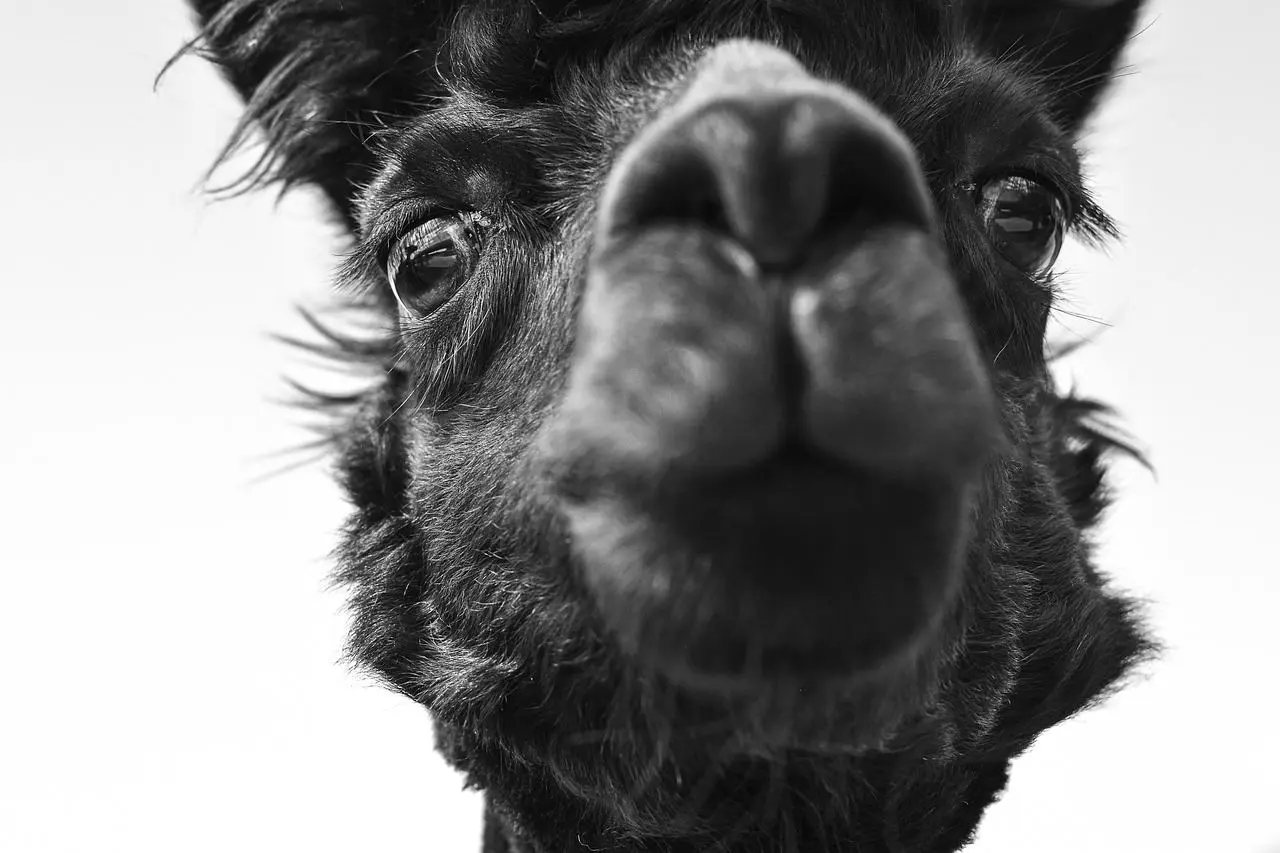
Alpacas are often confused with the llama, but National Geographic notes that alpacas have shorter ears and blunter faces (National Geographic). Wikipedia adds that alpacas are visibly shorter and predominantly bred for wool, while llamas have long been more highly prized as livestock guardians and pack animals (Wikipedia).
The full comparison is in alpaca vs llama.
All four South American camelids are closely related and can successfully crossbreed (Wikipedia). A 2020 study in the Journal of Arid Environments found that interbreeding among these species is diluting the alpaca’s ancestral genetics, as reported by National Geographic.
That mixing also helps explain a genetic puzzle. The mismatch between mitochondrial DNA and microsatellite data seems to stem from recent husbandry practices that caused hybridization between llamas and alpacas (Wikipedia).
National Geographic’s species profile reports a world alpaca population of almost four million, with 96 percent found in Peru and Bolivia, and more than 250,000 in the United States (National Geographic). The same profile describes climate change as a threat to the Andean pastures where alpacas graze.
Frequently asked questions
How many alpaca breeds are there?
Show answer
Just two domesticated breeds are recognized, and a fluffy coat versus long hanging locks is the quickest way to tell them apart (National Geographic).
Are alpacas aggressive?
Show answer
Wikipedia describes them as docile toward humans, though males tend to be the more aggressive sex (Huacaya entry, alpaca entry). For any concern about an animal’s health or behavior, ask a veterinarian experienced with camelids.
Can an alpaca live alone?
Show answer
It is a poor idea. National Geographic calls them so social that they only thrive if they live with at least one other alpaca.
Are alpacas and llamas the same animal?
Show answer
No. They come from different wild ancestors: the vicuña for alpacas and the guanaco for llamas (National Geographic).