
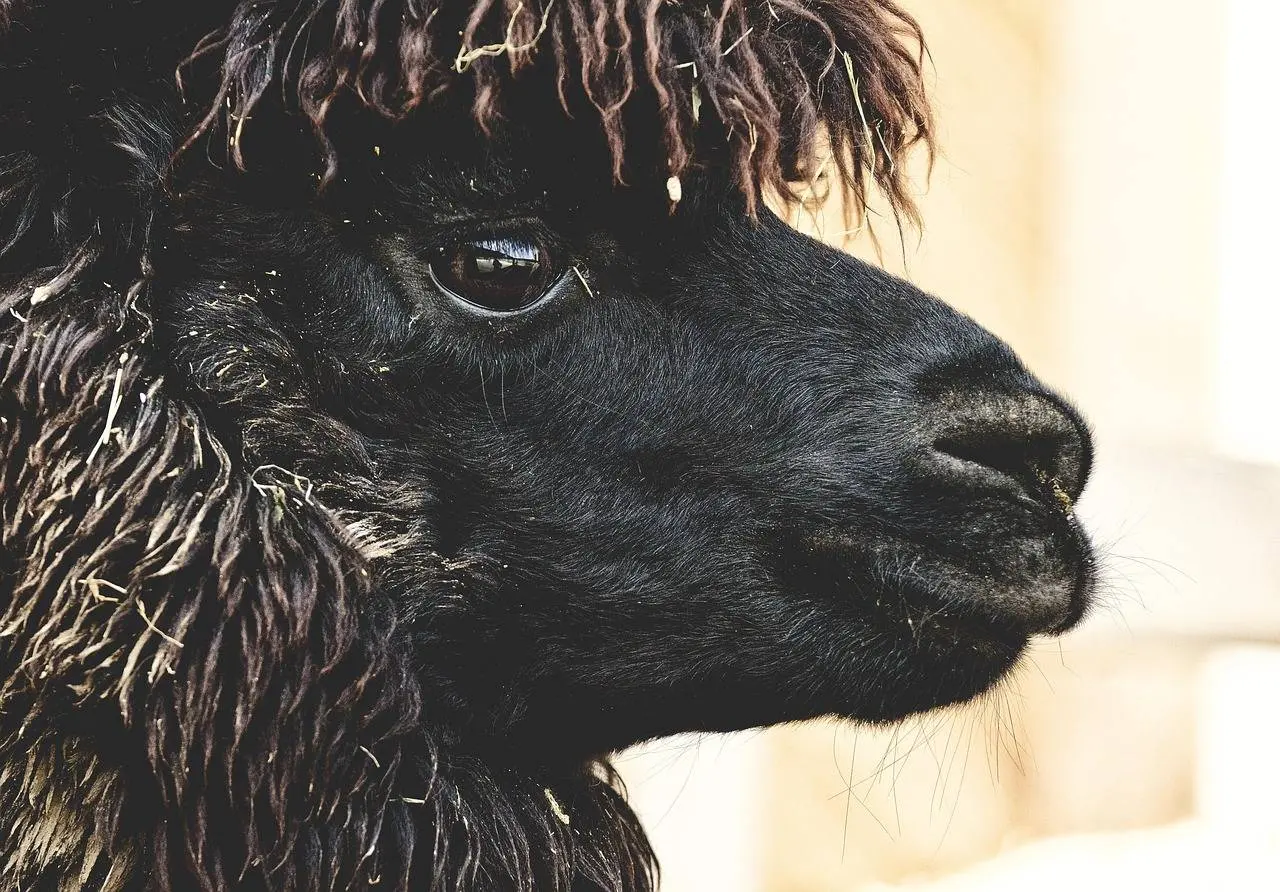
Standing in front of a fence and can’t tell which is which? In the alpaca vs llama question, llamas are about twice the size and carry loads, while alpacas are smaller and grown for fine fiber.
If you want the wider picture of how alpacas are grouped, read the overview of alpaca breeds.
| Item | Value |
|---|---|
| Alpaca weight | About 100 to 175 pounds |
| Llama weight | Between 280 and 450 pounds |
| Alpaca lifespan | About 15-25 years |
| Llama lifespan | 15 to 30 years |
| Alpaca gestation | 335 days |
| Llama gestation | 350 days |
These figures come from the Rutgers Cooperative Extension llama and alpaca fact sheet and the Rutgers youth animal science summary of it. Figures can change, so check the source before you rely on them.
How big is each animal, and how long does it live?
Rutgers Cooperative Extension says llamas are about twice the size of alpacas. It adds that llamas serve as pack animals while alpacas are kept for their fine fiber, as the extension fact sheet explains.
A llama stands 40-45 inches at the withers and weighs between 280 and 450 pounds. An alpaca is about three feet at the withers and weighs about 100 to 175 pounds, according to the same fact sheet.
Lifespans overlap, but the llama’s runs longer. The fact sheet gives about 15-25 years for an alpaca and 15 to 30 years for a llama.
Pregnancy is slightly shorter in alpacas, at 335 days against 350 days for llamas. Per the same source, a newborn cria may weigh 15-19 pounds in alpacas, while llama crias weigh between 20-35 pounds.
Fiber and coat
Fiber is where alpacas pull ahead. Rutgers describes llama hair as more wiry and coarse, and alpaca hair as fine and silky, in its fact sheet.
Discover Wildlife makes the same point from a wildlife angle. It says alpacas have a dense, soft fleece ranked among the finest natural fibres after cashmere, while llamas wear a coarser double coat that shields them from the elements, as its comparison notes.
Processing is another reason alpaca fiber is sought after. A Rutgers summary calls it finer, oil free and lightweight, yielding approximately 93% of its original weight after processing.
Alpacas also come in two fleece types. Suri wool is silkier and forms in dreads, while huacaya wool is crimpy and forms in bundles, according to the Rutgers fact sheet. You can read a closer comparison in the guide to huacaya vs suri alpaca fleece.
Face, ears, back and teeth
Look at the head first. Alpacas have shorter noses and more symmetrical, pear-shaped ears, while llama ears are longer and banana shaped, per the Rutgers fact sheet.

From the side, the alpaca’s back has a slight upward curve, while the llama’s back is straight. The same source also notes that alpaca incisors have no enamel on the tongue side, which lets those teeth keep growing as they wear down, unlike the fully enameled llama teeth.
| Feature | Alpaca | Llama |
|---|---|---|
| Ears | Pear-shaped, more symmetrical | Longer, banana shaped |
| Back | Slight upward curve | Straight |
| Hair | Fine and silky | Wiry and coarse |
| Believed ancestor | Vicuña | Guanaco |
| Incisors | No enamel on the tongue side | Fully enameled |
The table draws on the Rutgers Cooperative Extension fact sheet and the Rutgers youth summary. Check the sources before you rely on the details.
Temperament and spitting
Individual animals vary. A Rutgers summary says that, just like people, alpacas and llamas have unique personalities, and that most are mild tempered animals that thrive in a herd.
Still, there are tendencies. Discover Wildlife describes llamas as more independent and confident, and alpacas as more timid and herd-oriented, relying on each other for protection, in its comparison.
Spitting is the part most people worry about. Rutgers says alpacas mostly spit at herd-mates to assert dominance and rarely at humans unless provoked, while llamas have a slightly more aggressive nature and have been known to spit at the casual passer-by, per its youth resource.
Both species share a body-language toolkit of posture, ear and tail movements. The fact sheet lists the aggressive signals:
- Foot-stomping
- Kicking
- Spitting
Jobs, pasture and care
Historically both have been used for packing, guarding and fiber, but each leans toward certain work. The Rutgers summary points to these roles:
- Packing: llamas make the better pack animal because of their straight back, and can typically carry 70 to 120 pounds.
- Guarding: llamas have been reported to be good guard animals against coyotes and dogs.
- Fiber: alpacas are the animal to choose for fine fleece.
Pasture needs depend on quality. One Rutgers page says an acre can sustain 5-10 alpacas or 4 llamas, while the fact sheet mentions 4-5 animals an acre on good-quality pasture. Treat any stocking figure as a rough guide, because the two Rutgers pages differ.
Both species are gentle grazers that put little stress on the land. Questions about health, medication, dosing or an emergency belong with a veterinarian experienced with camelids, not with a general guide like this one.
Where did llamas and alpacas come from?
Both are natives of the Andes. Rutgers names the mountain regions of Peru, Bolivia and Chile in its youth summary.
The llama is believed to descend from the guanaco, while the alpaca was domesticated from the wild vicuña for fiber production. The fact sheet adds that llamas were domesticated from guanacos in the Andean highlands of Peru 4,000-5,000 years ago.
The longer story of the alpaca’s role in Andean life is told in the page on alpaca history.
Frequently asked questions
Are an alpaca and a llama the same animal?
Show answer
No. The Rutgers youth resource calls it a misconception that they are one and the same, describing two different species in the camelid family.
How can I tell them apart at a glance?
Show answer
Check overall size and the ears. A llama is the bigger animal with long, curved ears, while an alpaca is compact with short, pear-shaped ones, according to the extension fact sheet.
Can I keep just one?
Show answer
Rutgers describes both as social animals that do best pastured together and advises groups of at least 2, in its fact sheet.
What routine care do they need?
Show answer
The Rutgers summary lists annual vaccinations, worming, toenail trimming and shearing. Ask a veterinarian experienced with camelids what suits your own animals.