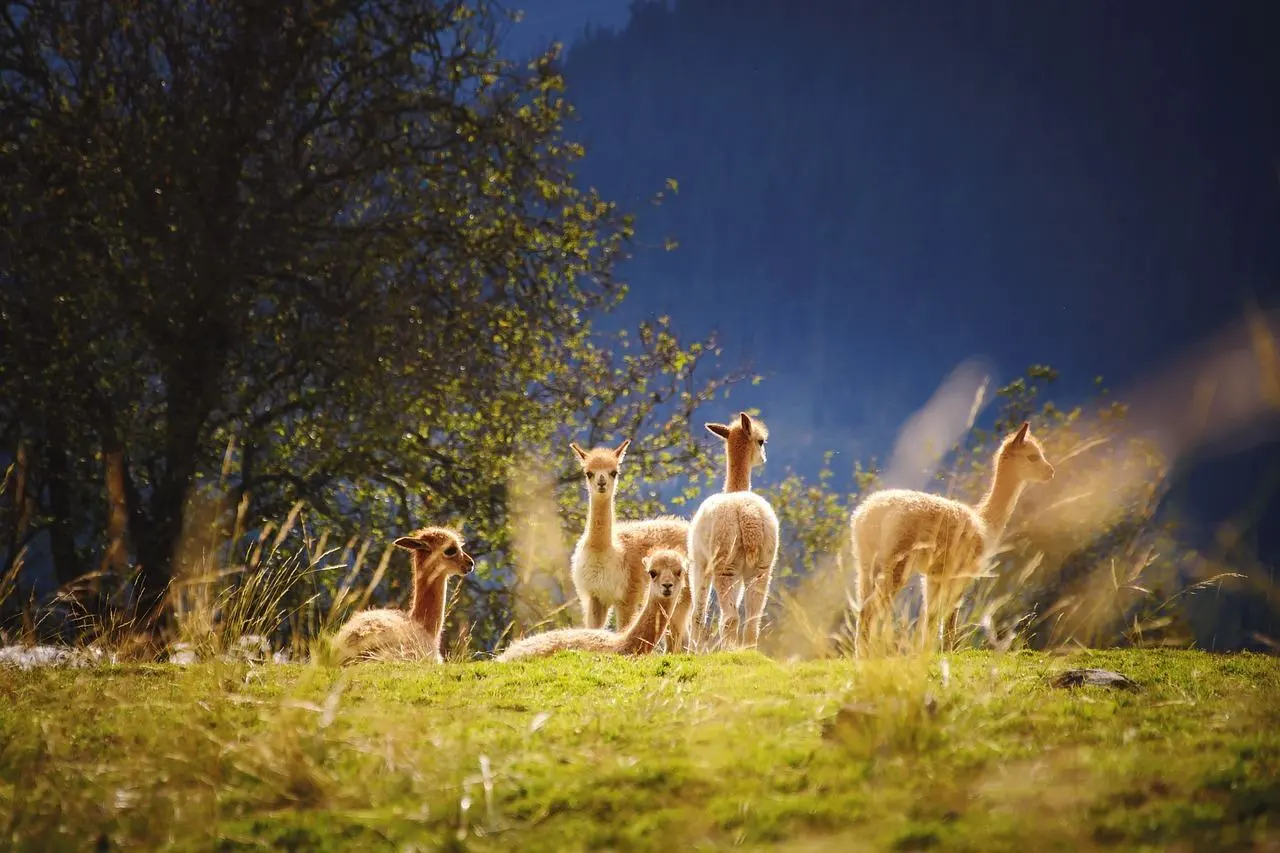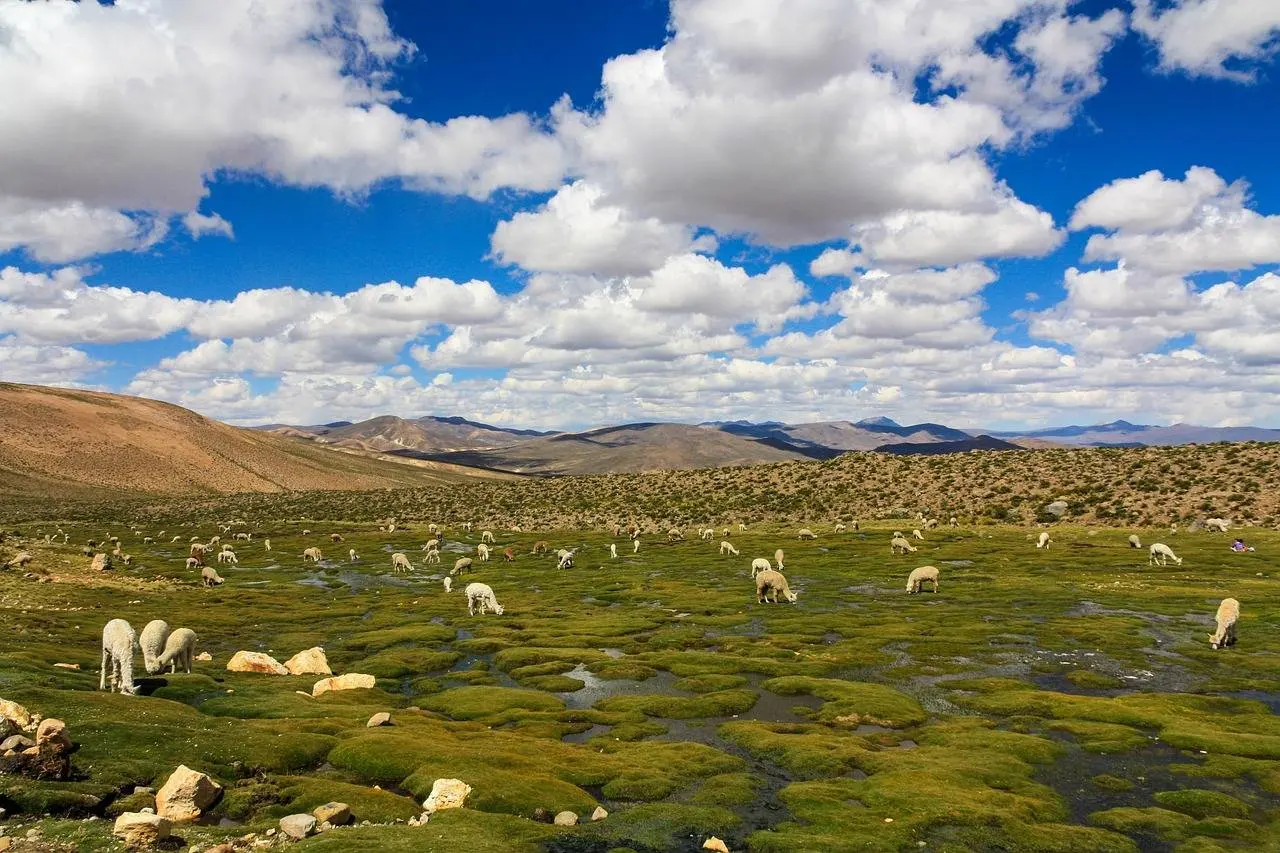
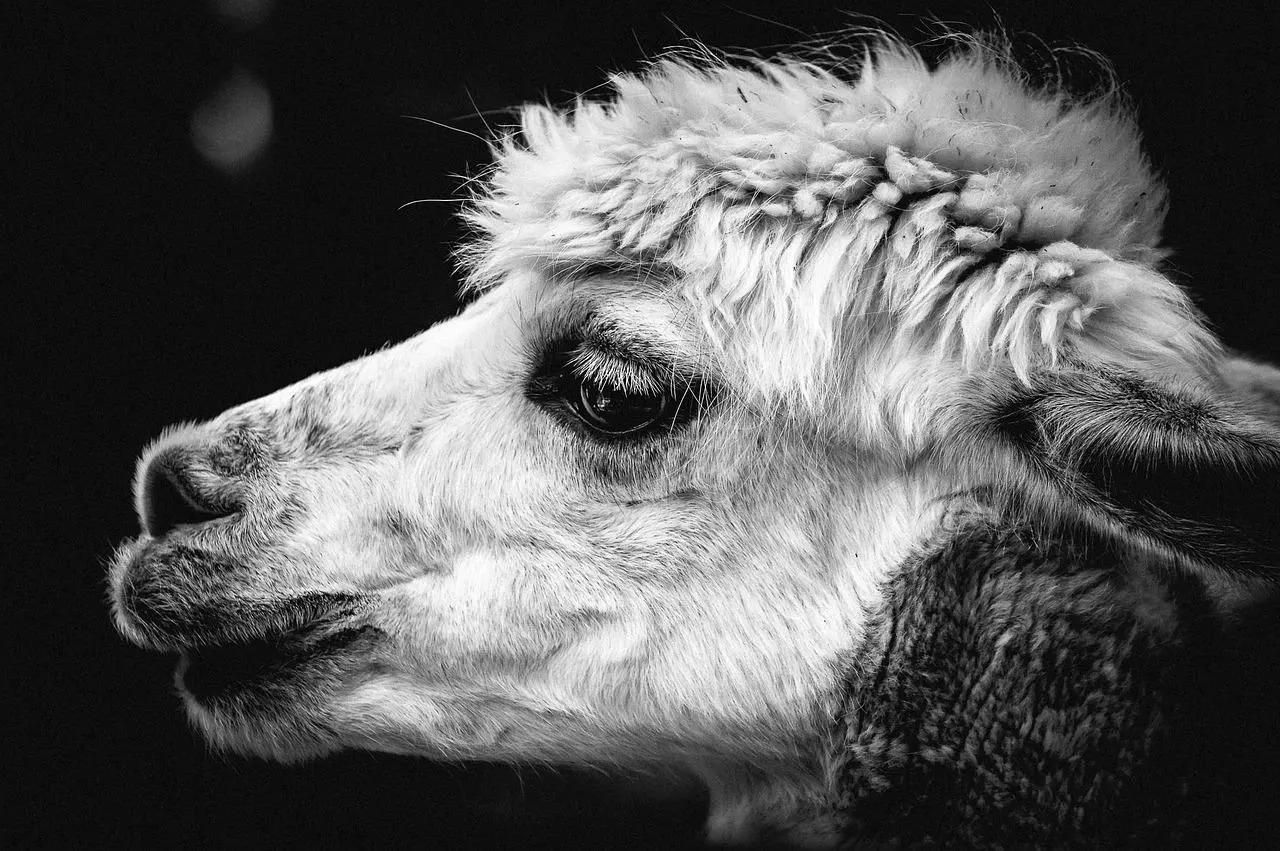
Wondering which fleece type you’re looking at? In a huacaya vs suri alpaca comparison, Huacaya has crimpy, sheep-like fluff, while Suri has long, silky locks that hang in pencil-like strands.
The two types are covered within the wider topic of alpaca breeds.
| Item | Value |
|---|---|
| Suri share of alpacas worldwide | Less than 10% |
| Huacaya share of alpacas worldwide | More than 90% |
| Adult Huacaya height at the withers | 32-39 inches (81-99 cm) |
| Mean crimp of Huacaya fiber | 32 degrees/mm |
| Common Huacaya shearing schedule | 12-month basis |
These figures come from Wikipedia’s pages on Suri alpacas and Huacaya alpacas. Estimates like these can change, so check the source before you rely on them.
How the fleece looks and feels
The most visible difference is the fleece. The Huacaya has a “wavy and spongy look” to its fiber, while the Suri has “straight fiber with no crimp”, according to the Huacaya alpaca page.
A separate page on alpaca fiber describes Huacaya as dense, soft and crimpy like sheep fiber. It describes Suri as having silky, pencil-like locks that resemble dreadlocks without matted fibers.
Show judges draw the same line. A Peruvian fiber study says Huacayas have higher fiber density with shorter, more crimped fibers, while Suris have long fibers with curls and luster, organized in independent staples that hang parallel to the body.
A quick way to separate them in the paddock:
- Outline: a rounded, fluffy shape suggests Huacaya; a coat that drapes downward suggests Suri.
- Up close: wavy, spongy fiber means Huacaya; straight fiber with no crimp means Suri.
- Locks: separate hanging strands with a silky look are typical of Suri.
Which type is more common?
The Huacaya is by far the more common type. Estimates put it at more than 90% of alpacas worldwide, according to the Huacaya page.
The Suri share is small. Of an estimated 3.7 million alpacas worldwide, less than 10% are thought to be Suri, as the Suri alpaca page reports.
North America looks different. Suris are estimated to make up 19-20% of the North American alpaca population, and the breed has grown in number and in color range since its import into the United States, says the alpaca fiber page.
The same page suggests why Suri is rarer overall: the breed was most likely reserved for royalty in Incan times. Both types trace back to animals the Incas domesticated thousands of years ago from the wild vicuña.
What fiber studies show about the two types
Fiber is measured by diameter in microns, and lower micron counts are favored because thicker fiber is more likely to tear. The most frequent fiber diameter in U.S. Huacayas is 30 μm, according to the Huacaya page.
Crimp is the other measure that separates the types. Huacaya fiber has a low crimp compared with sheep wool, with a mean of 32 degrees/mm, whereas Suri has none, as the same page and the alpaca fiber page agree.
A Peruvian study took fiber samples from 118 Huacaya and Suri alpacas at two livestock shows and at a research center in Cusco. Its results show Huacaya fiber with a lower mean fiber diameter than Suri, and a longer staple length in Suri.
The same study found that show alpacas had higher-quality fiber than unselected animals at the research center, so selection matters as well as type. Suri alpacas may also be bred for the lustre of their coats, per the Suri alpaca page. Averages describe groups, not individual animals.
What each fleece is used for
Huacaya fiber has natural crimp, which gives an elastic yarn well suited to knitting. Suri has no crimp and is a better fit for woven goods, according to the alpaca fiber page.
Both fibers can go through the worsted process as light yarn or thread. Huacaya can additionally be used in a woolen process and spun into various weights, says the same page.
As an example of Suri in fashion, the designer Giorgio Armani has used Suri alpaca to make men’s and women’s suits, as noted on that page.
Does the type change everyday care?
Much of the husbandry is shared. The Huacaya page says their digestive tract, nutrition requirements and herd behavior mirror those of all camelids.
Alpacas belong to the wider group of south american camelids, and the same page notes they share biological traits with other species in the Camelidae family.
Shearing is a routine example. Many farmers shear Huacayas on a 12-month basis, and some in South America wait longer to gain fiber length, per the Huacaya page. The alpaca fiber page adds that alpacas are shorn once a year in spring.
Suris are often said to be less cold hardy than Huacayas, but both are raised successfully in more extreme climates, according to the same alpaca fiber page.
Size figures are easier to find for Huacayas, with adults standing 32-39 inches (81-99 cm) at the withers, per the Huacaya page. A size gap between the types should not be assumed.
If your question is about species rather than fleece type, the alpaca vs llama comparison is the better place to look.
For any health concern, diagnosis, medication or emergency, consult a veterinarian experienced with camelids. Fleece type is not a guide to treatment.
Frequently asked questions
How can you tell a Suri from a Huacaya at a glance?
Show answer
Check how the fleece sits on the body. A crimped, spongy coat means Huacaya, while strands that drape and curl like ringlets suggest Suri.
Which type has finer fiber?
Show answer
In that Peruvian sample, Huacayas averaged finer fiber, whereas Suris had longer locks, as the study reports. Individual animals vary, so type alone does not settle fineness.
Are Huacaya and Suri separate species?
Show answer
No. They are two breeds of the same animal, the alpaca, as the Suri alpaca page explains.
Does one type have health advantages?
Show answer
The sources behind this page do not point to either type as healthier. Ask a veterinarian experienced with camelids about any specific concern.