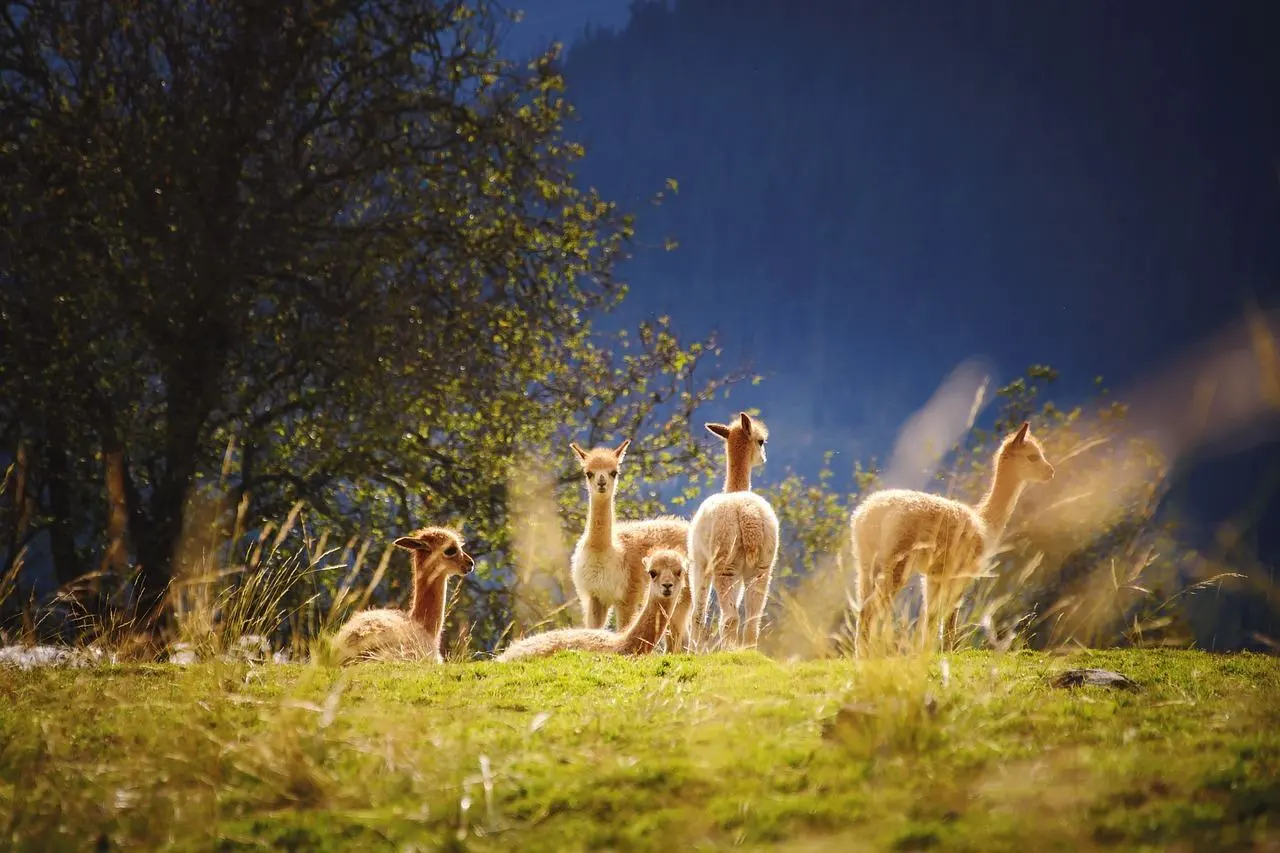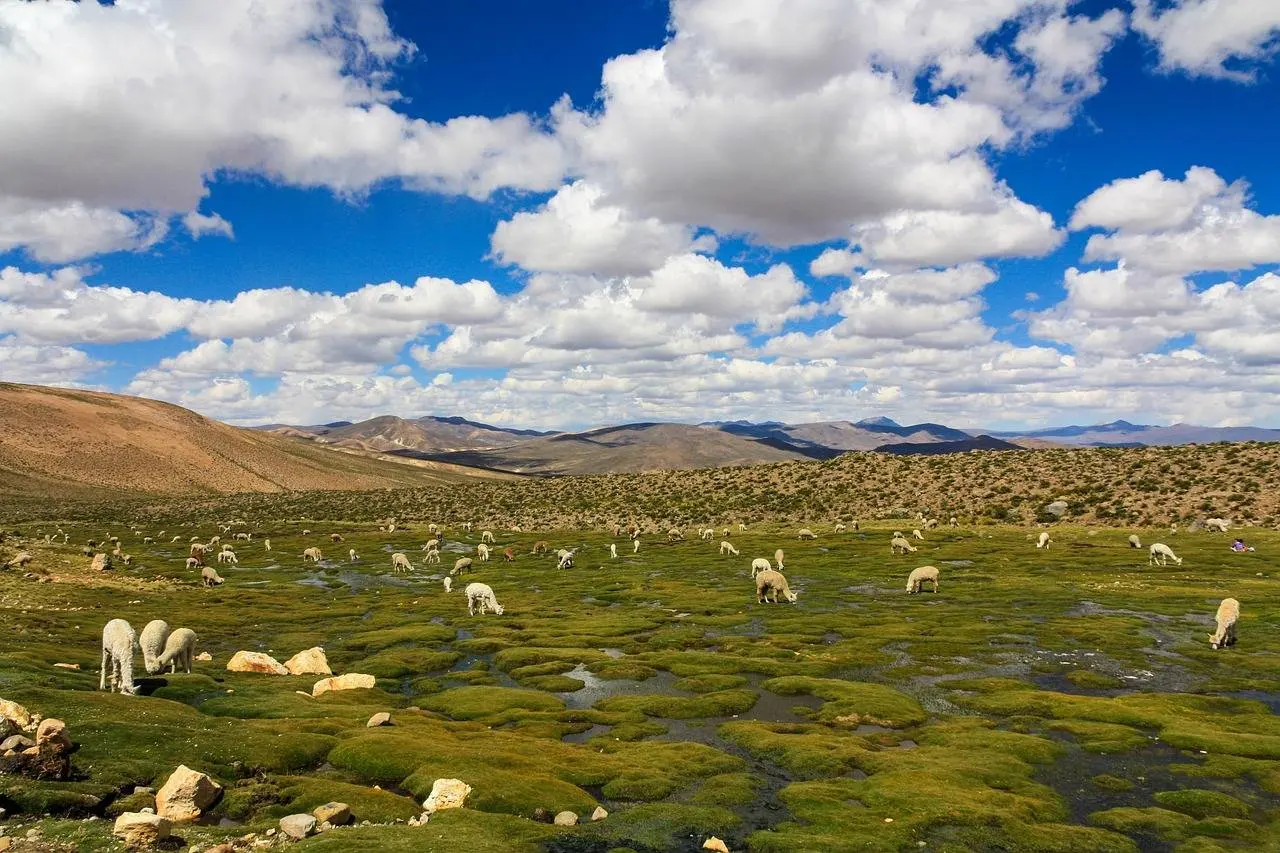
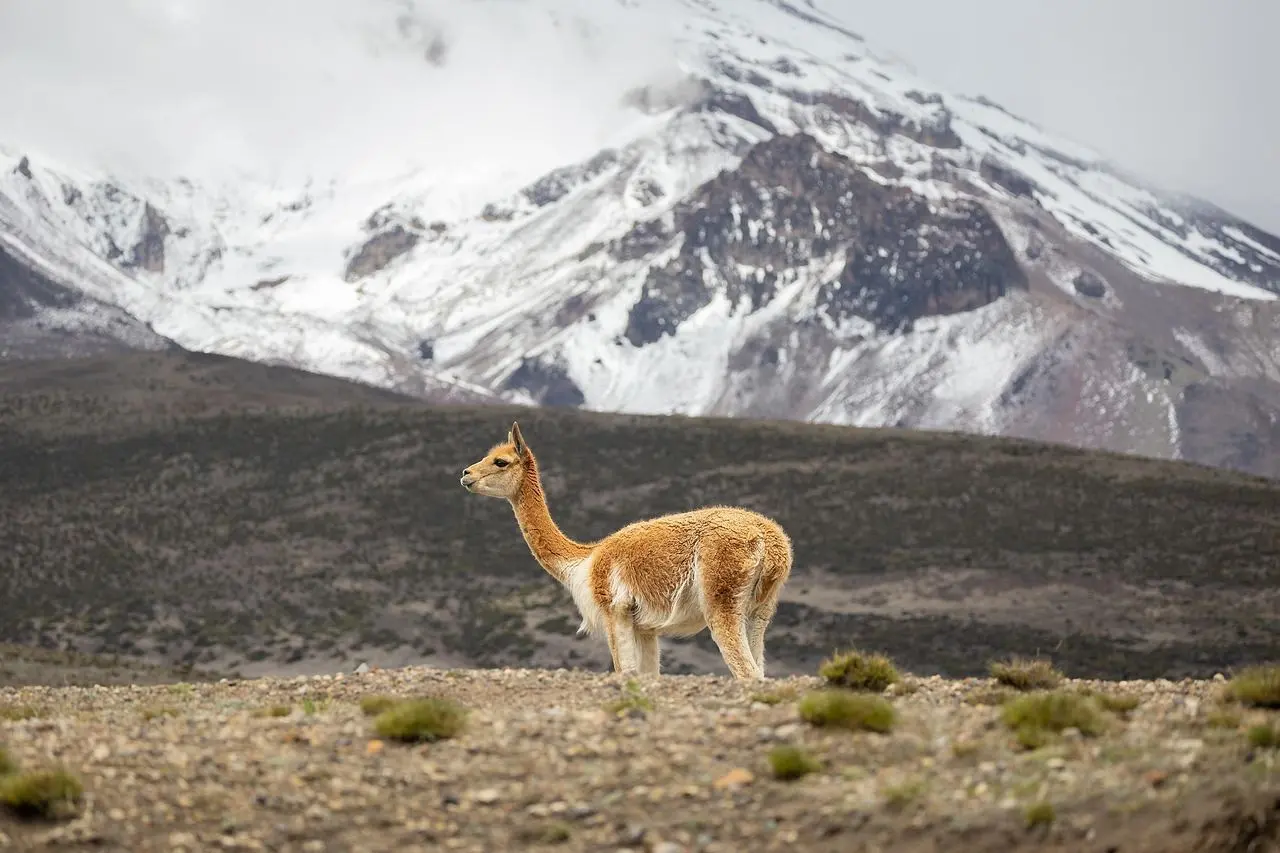
Wondering how alpacas relate to llamas? The four living South American camelids are two wild species, the guanaco and vicuña, and two domesticated ones, the llama and alpaca.
This page is part of the wider guide to alpaca breeds, and it looks at the animal group rather than at any single breed.
| Item | Value |
|---|---|
| Wild species of the genus | Guanaco and vicuña |
| Domesticated species | Llama and alpaca (the chilihueque is extinct) |
| Alpaca domestication, Peruvian Andes | 6000-7000 years before present |
| Llama ancestor enters South America | About 3 million years ago |
| Llama and alpaca sequences in the guanaco mtDNA lineage | 80% |
| Chilihueque extinction | 16th or 17th century |
The figures come from the Wikipedia page on the genus Lama and from a genetic study of llama and alpaca origins. Dates and classifications can change as research is revised, so check the source before you rely on them.
The family at a glance
The genus Lama is described on the Wikipedia genus page as containing the South American camelids: the wild guanaco and vicuña and the domesticated llama, alpaca, and extinct chilihueque. In plain terms, the group has wild members and tame ones.
- Guanaco: a wild species, traditionally regarded as the ancestor of both domestic forms.
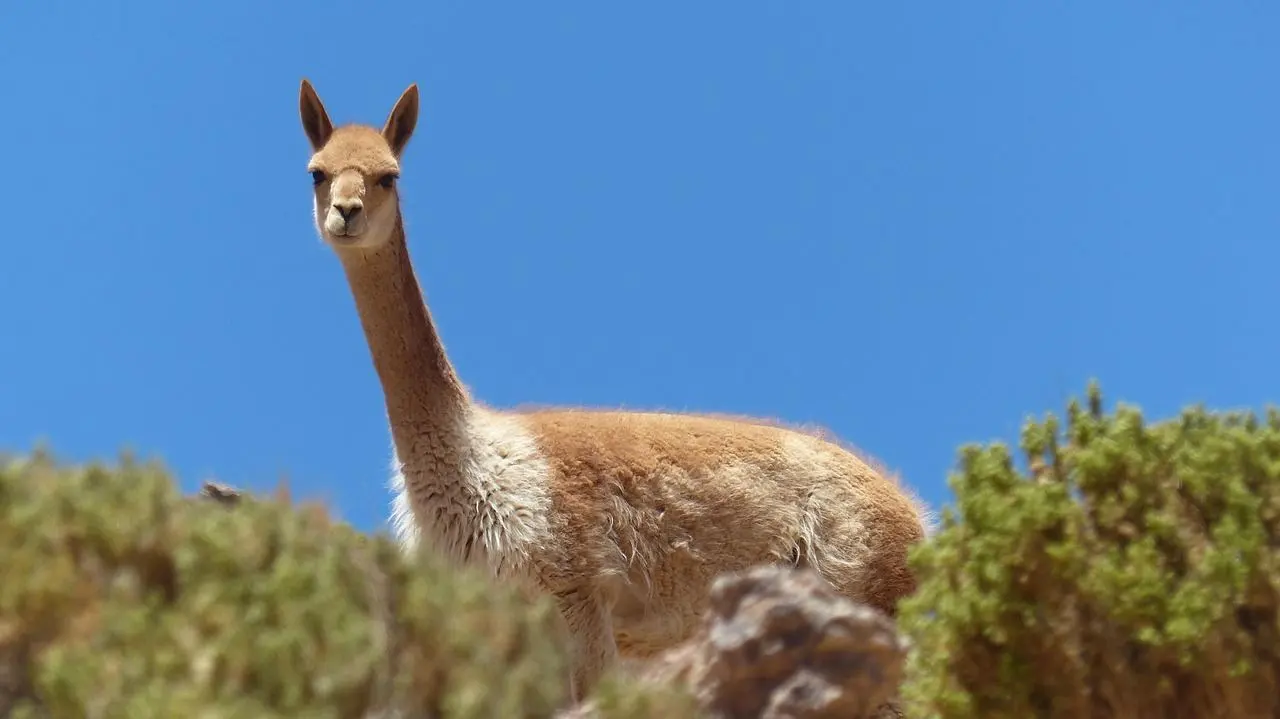
- Vicuña: a wild species, and the animal that genetic work links to the alpaca.
- Llama: a domesticated species kept across the continent.
- Alpaca: a domesticated species, the one this site is about.
Before the Spanish conquest of the Americas, llamas, alpacas, and chilihueques were the only domesticated ungulates of the continent, according to the same page. People kept them as beasts of burden, and also for flesh, hides, and wool.
Where South American camelids came from
The camel family began in the north. The Wikipedia page notes that North America was the original home of the Camelidae, and that no transitional forms have turned up in Old World strata.
The ancestor of modern camels crossed Beringia into Eurasia and Africa about 7 million years ago, the page explains. The ancestor of the modern llamas entered South America via the Isthmus of Panama about 3 million years ago, as part of the Great American Interchange.
Later, the New World llamas became restricted to South America after Paleo-Indians settled the Americas and the megafauna died out. The page also points out that these animals and the Old World camels are the sole living representatives of the group Tylopoda, or “hump-footed”, named for the bumps on the soles of their feet.
How the wild and domestic species are related
Working out where the tame animals came from has never been simple. A 2001 genetic study says the question stayed controversial because of hybridization, near extirpation during the Spanish conquest and difficulties in archaeological interpretation.
The traditional view credited the guanaco with the ancestry of both forms and assumed the vicuña was never domesticated. The same study says later research linked the alpaca to the vicuña and dated domestication to 6000-7000 years before present in the Peruvian Andes.
The authors used two kinds of DNA evidence, and the two told different stories at first.
- Mitochondrial DNA placed 80% of llama and alpaca sequences in the guanaco lineage. Sequences of vicuña type were nearly all from alpacas or alpaca-vicuña hybrids.
- Microsatellite markers showed high genetic similarity between alpaca and vicuña, and between llama and guanaco, though hybridization in both directions also showed up.
Combining both kinds of marker, the researchers concluded that the alpaca descends from the vicuña and should be reclassified as Vicugna pacos.
Why the genus name keeps changing
The naming history explains why you may see an alpaca called either Lama pacos or Vicugna pacos. The Wikipedia genus page traces the steps in order.
- Early writers compared the animals to sheep, but their link to the camel was soon seen, and Linnaeus placed them in the genus Camelus in his Systema Naturae.
- In 1800, Cuvier moved the llama, alpaca, and guanaco to the genus Lama, and the vicuña to the genus Vicugna.
- After genetic testing showed the alpaca descends from the vicuña, it was moved to Vicugna as well.
- The American Society of Mammalogists later moved the Vicugna species back into Lama because of low genetic distance between the two.
The page adds that the Royal Society keeps the two genera separate. Neither label changes the animal itself, so match the name to the source you are reading.
If you want to go further into the alpaca itself, the fleece types are compared in huacaya vs suri alpaca. How the animals live together is covered in a page on alpaca herd behavior.
The chilihueque, a lost relative
The chilihueque (or hueque) lived in central and south-central Chile in pre-Hispanic and early colonial times. Its exact status is debated: one hypothesis holds that it was a locally domesticated guanaco, and the other that it was a variety of llama brought south from the north.
According to the Wikipedia genus page, the Dutch captain Joris van Spilbergen observed Mapuches on Mocha Island using chilihueques as plough animals in 1614. The animals became extinct in the 16th or 17th century, replaced by European livestock, and the causes of the extinction are unknown.
Frequently asked questions
Are alpacas and llamas the same species?
Show answer
No. They are listed as separate species, Lama glama and Lama pacos, on the genus page. Genetic markers also pair each with a different wild animal.
Which wild animal is the alpaca descended from?
Show answer
The evidence in the Royal Society study points to the vicuña. The llama, by contrast, sits closest to the guanaco.
Are these animals related to Old World camels?
Show answer
Yes, both belong to the single family Camelidae. Their shared roots lie in North America, as the genus page describes.
Where can I get health advice for camelids?
Show answer
This page covers classification and origins only, not animal health. For any health concern, diagnosis, medication or emergency, consult a veterinarian experienced with camelids.