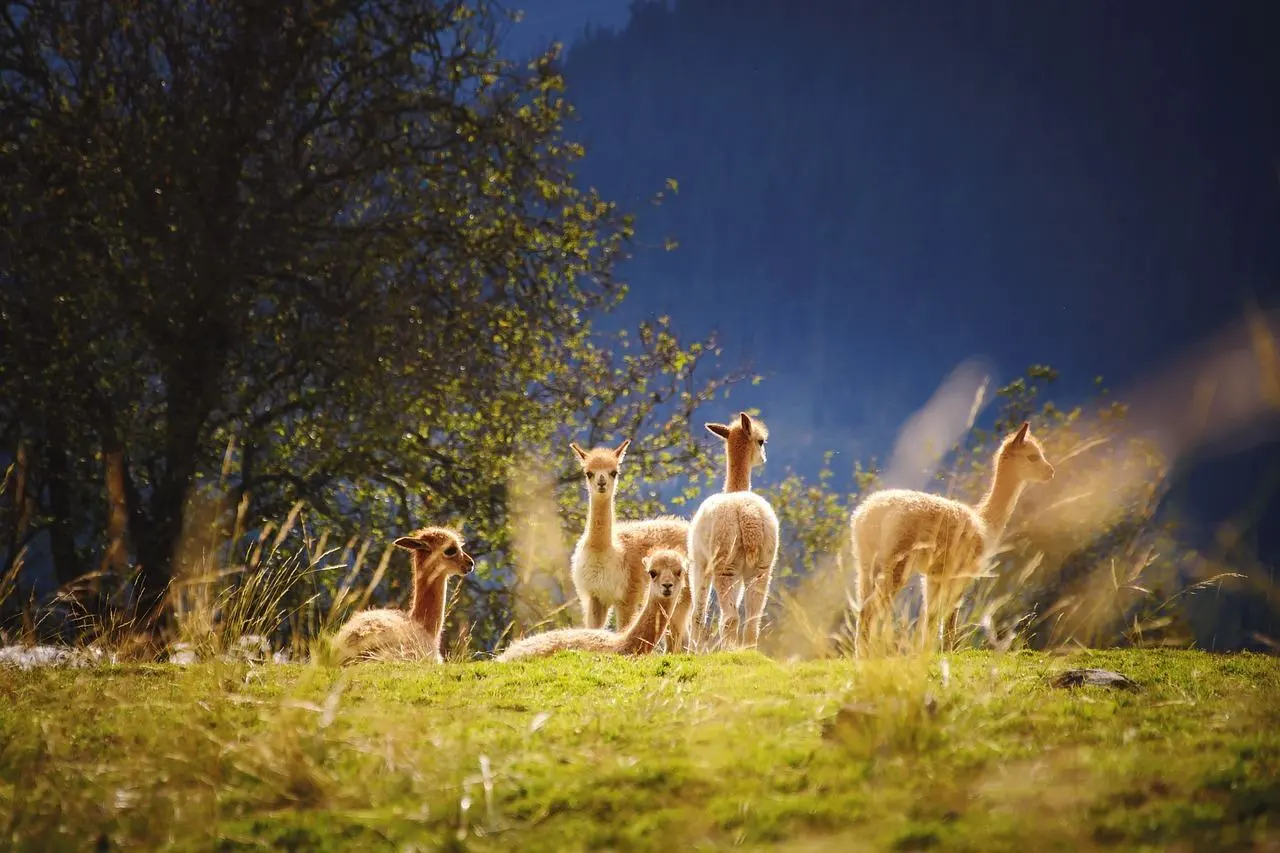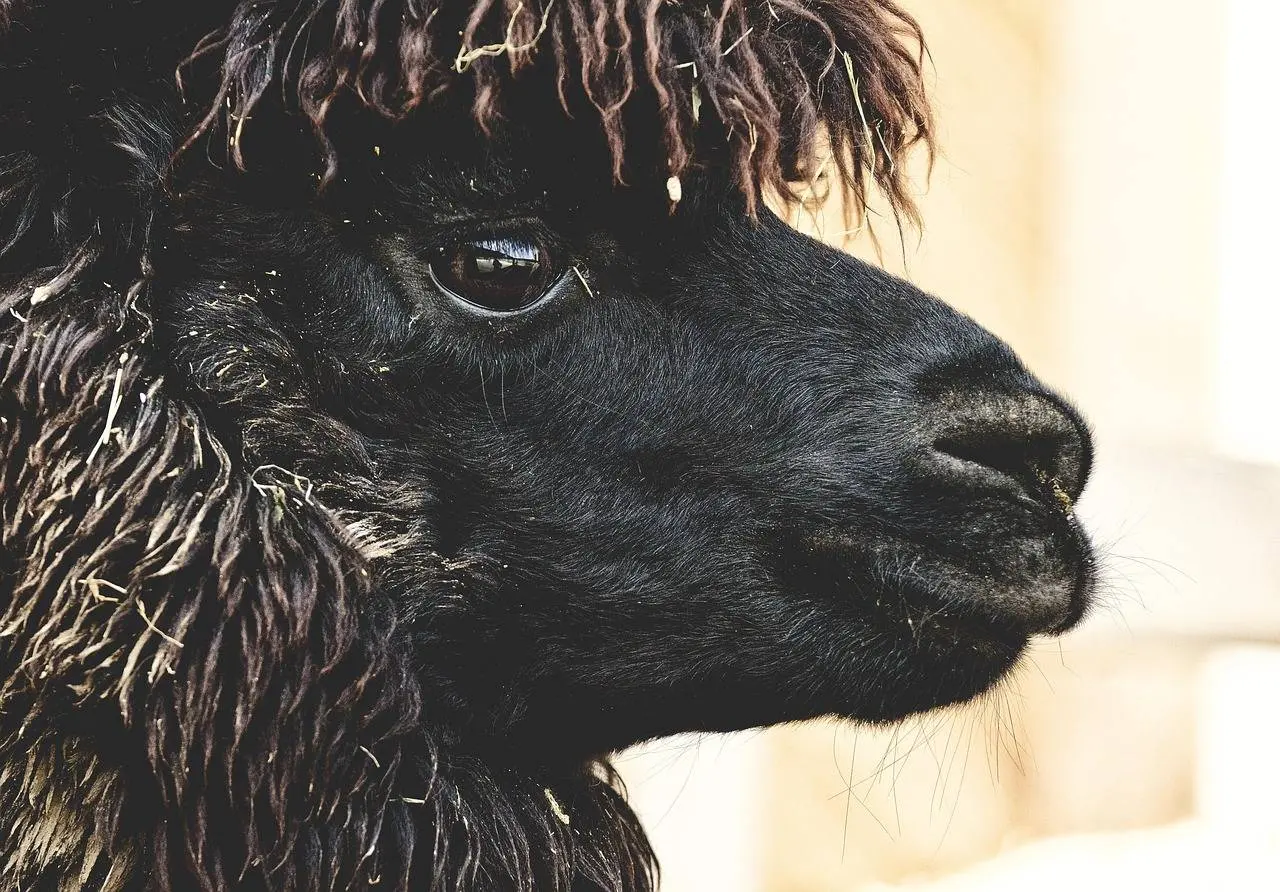
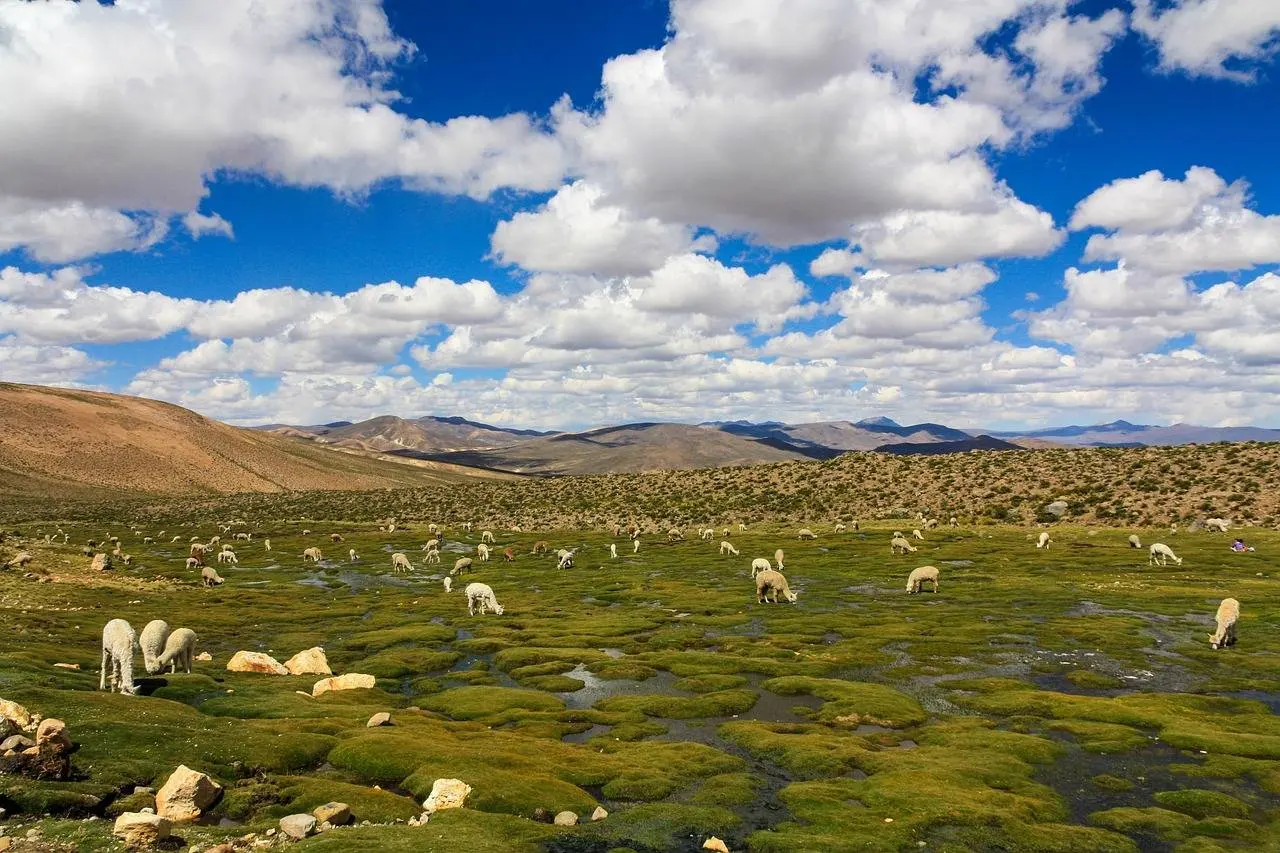
Wondering where the alpacas you see today came from? Alpaca history begins in the Andes, where people domesticated the wild vicuña into the alpaca, though DNA studies still debate the details.
This page is part of a wider guide to alpaca breeds.
| Item | Value |
|---|---|
| Proposed wild ancestor of the alpaca | Vicuña (alpaca named Vicugna pacos) |
| Domestication estimate, Peruvian Andes | 6000-7000 years before present |
| Llama and alpaca first seen in the fossil record | Around 7,000 years before the present |
| Llama and alpaca mitochondrial sequences in the guanaco lineage | 80% |
| Ancient camelids sequenced at two Tulán sites | 61 mitogenomes, dated between 3,500 and 2,400 years before the present |
The figures come from a genetic study of llama and alpaca ancestry and an ancient DNA study from Northern Chile. Dates and percentages can change as new research appears, so check the sources before you rely on them.
Where did alpacas come from?
Alpacas belong to the South American camelids, which an eLife paper of 2021 describes as four species: two wild and two domestic. The source for this count is the eLife study.
- Guanaco (Lama guanicoe): wild
- Vicuña (Vicugna vicugna): wild
- Llama (Lama glama): domestic
- Alpaca (Vicugna pacos): domestic
The whole family shares a common ancestor that lived in North America 9-11 million years ago, according to a Frontiers in Genetics paper on camelid coat colour. New World camelids trace back to a group called Hemiauchenia, whose descendants moved into South America.
If you are comparing the two domestic species directly, the guide to alpaca vs llama sets them side by side.
What does DNA say about the alpaca’s ancestor?
Researchers have proposed four hypotheses for where the domestic species came from, as the eLife study summarises:
- Llamas came from guanacos and alpacas came from vicuñas.
- Llamas came from guanacos, while alpacas arose from llama-vicuña hybrids.
- Both came from guanacos, and the vicuña was never domesticated.
- Both came from extinct wild precursors, and neither guanaco nor vicuña was domesticated.
The traditional view credits the guanaco with both domestic forms and assumes the vicuña was never domesticated. That is how a study by Kadwell and colleagues describes the older consensus.
That team tested mitochondrial and microsatellite DNA and got two different signals. Mitochondrial DNA placed 80% of llama and alpaca sequences in the guanaco lineage, and the sequences carrying vicuña mitochondrial DNA were nearly all alpaca or alpaca-vicuña hybrids. The microsatellite markers instead showed high genetic similarity between alpaca and vicuña, and between llama and guanaco.
Their combined analysis suggested the alpaca descends from the vicuña and should be called Vicugna pacos. That paper was published in 2001, as the same source shows. A later paper on coat colour genes likewise describes the alpaca as domesticated from the vicuña for its fine fibre, with the llama raised mainly as a pack animal and for its fibre.
Dating the domestication of the alpaca
The Kadwell study cites research dating domestication to 6000-7000 years before present in the Peruvian Andes. The paper also notes that the origins of the alpaca and llama remain controversial.
The fossil record gives a similar window. Llama and alpaca first appear there around 7,000 years before the present, the result of domestication by human communities across the Andes, according to the eLife paper.
These animals mattered well beyond fibre. Camelids were key in the transition from hunter-gatherer life to a mixed economy and held a central place in the worldview of past Andean communities, the same eLife source says.
Domestication in general is much older. The first attempts, by one account, coincided with the origins of agriculture some 10,000 years ago. South America was the last habitable continent colonised by humans, and it became the site of multiple domestication hotspots.
Ancient DNA from Northern Chile
Bones alone make it hard to tell domestic camelids from their wild ancestors, so researchers turned to DNA. The 2021 eLife team generated mitochondrial genomes for 61 ancient camelids dated between 3,500 and 2,400 years before the present, from two archaeological sites in Northern Chile (Tulán-54 and Tulán-85).
They compared these with 66 modern camelid mitogenomes and 815 modern mitochondrial control region sequences from across South America. Details are in the eLife paper.
The comparison produced three notable findings, all reported in the same study:
- A substantial proportion of the ancient vicuña genetic variation has been lost since the Early Formative period, because it is absent from modern specimens.
- The authors propose a domestication hypothesis that includes an ancient guanaco population that no longer exists.
- Interbreeding was widespread among early herders in the Atacama during the Early Formative period, before the Spanish conquest.
Hybridization and the Spanish conquest
Mixing between llamas and alpacas is a major reason the question is still open. The eLife authors explain that the domestic species are thought to have hybridized extensively after the Spanish conquest, when camelids were slaughtered en masse.
The Kadwell team likewise lists hybridization and near extirpation during the conquest among the difficulties in reading the animals’ origins, in the 2001 paper. Archaeological interpretation adds a third problem.
Coat colour genes show the same blurring. In the Frontiers in Genetics study, variation in MC1R and ASIP did not separate alpaca from llama because of high reciprocal introgression. A combination of 11 substitutions was enough to tell domestic animals from wild ones.
Behaviour questions are a separate topic, covered in the explainer on why do alpacas spit.
Selection for fibre and colour
The same Frontiers paper reports that archaeological records suggest domestication was carried out under significant control and planning. It argues this would have allowed coordinated and effective selective pressure toward desired traits, according to the paper’s introduction.
The authors hypothesise that variation in alpaca coat colour was strongly selected for and became rapidly fixed. Llama coat colours were of less economic value and so faced less selective pressure. Treat this as a hypothesis rather than a settled result.
Frequently asked questions
Which wild animal is the alpaca descended from?
Show answer
Most of the genetic evidence in the sources points to the vicuña. Some mitochondrial results lean toward the guanaco, which is why researchers describe the picture as ambiguous rather than closed.
How long ago were alpacas domesticated?
Show answer
Genetic and fossil work both point to roughly seven millennia ago in the Andes. Exact dating is still debated, and the wild ancestors of the domestic forms are not fully agreed upon either.
Did conquest-era killings change alpaca genetics?
Show answer
The research describes mass slaughter of camelids after the Spanish arrival, followed by mixing between the surviving domestic animals. That mixing, together with earlier interbreeding, makes the genetic record harder to read.
Are alpacas and llamas the same species?
Show answer
No. They are listed as two separate domestic species, Vicugna pacos and Lama glama, even though gene flow between them has been documented.