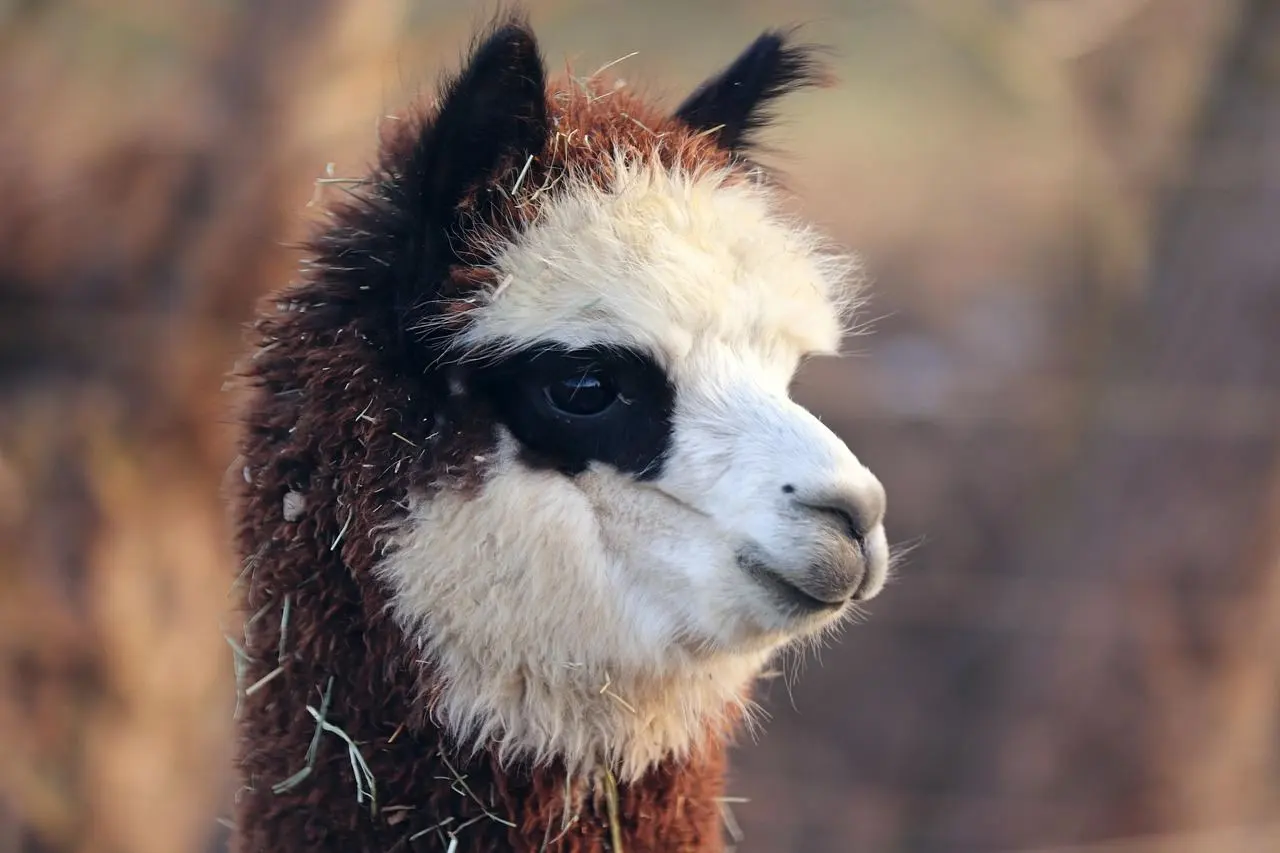
Wondering about the baby alpaca wool meaning on a sweater label? It describes fiber fineness, not the age of the animal. Baby alpaca is a premium grade, and the grade is measured in microns.
This explainer sits within the wider topic of alpaca fiber, which covers grades, fleece and yarn.
| Item | Value |
|---|---|
| What “baby” describes | A fiber fineness grade, not an animal’s age |
| Baby grade diameter, one retailer’s definition | 21.5 to 23 microns |
| Baby grade diameter, another retailer’s definition | 19-20 microns |
| Age of the animals most baby alpaca comes from | Not more than 2 years old |
| Softest area of the fleece | The blanket on the back |
These figures come from Yanantin Alpaca and Arms of Andes, and they can change or differ between makers, so check the source before you rely on them.
What baby alpaca wool actually means
On a label, baby alpaca names a grade of fiber, sorted by how fine it is. A guide from Farnelli describes it as a premium grade of alpaca fiber classified by fineness, not necessarily taken from baby animals.
The same page offers a plain buying tip: the term indicates a fineness grade, not animal age, and finer grades deliver softer results.
After shearing, the fleece is sorted. Arms of Andes says fibers are separated and classified on three features: fineness, length and color.
Color is one of those three features, and the natural shades are covered in a separate guide to alpaca fleece colors. The steps that follow grading are described in the guide on how alpaca fleece is processed.
Does baby alpaca come from baby alpacas?
Not in the way the name suggests. Arms of Andes states that baby alpaca wool does not come from a new-born alpaca baby.
Age still has an influence. Fiber tends to coarsen as the animal gets older, which is why most baby alpaca wool comes from alpacas that are not more than 2 years old, according to the same source.
Adults are not excluded. Yanantin Alpaca notes that some adults can still grow fibers that fall within the baby category of 21.5 to 23 microns, and that this depends on genetics, diet, living conditions and stress levels.
The animal itself has a separate name. The same source says an alpaca is considered a “baby” or “cria” from birth until about one year old, which is a statement about the animal rather than the fiber.
Micron ranges and why sources disagree
Fineness is measured in microns, and Knit Picks sums up the rule simply: the lower the number, the finer the fiber. Thinner fibers bend more easily, which Farnelli links to improved softness and reduced skin irritation.
The exact band for “baby” is not fixed across sellers. Yanantin Alpaca defines it as 21.5 to 23 microns, while Arms of Andes places it at 19-20 microns.
The Knit Picks tutorial is less exact, saying baby alpaca might have a micron count in the high teens whereas superfine alpaca would fall in the mid-twenties. All three agree on the order of the grades, even where the numbers differ.
- Royal alpaca: the finest grade, sometimes known as “super baby alpaca”. Arms of Andes gives 18 microns or less, while Yanantin puts royal under 21 microns.
- Baby alpaca: the second finest category, according to Arms of Andes.
- Regular alpaca: coarser again, at 23-26.5 microns according to Yanantin.
Because the bands differ, a printed micron figure tells you more than the word “baby” alone.
Where on the animal the fiber comes from
Body position matters alongside age. Yanantin says the softest fiber comes from the blanket area on the back, while coarser fiber is found on the legs, neck and belly.
Arms of Andes describes baby alpaca as sheared from the neck and chest area, and also found on the back. It adds that superfine alpaca comes from the legs and belly, which is the coarser end of the usable range.
Yanantin lists several factors that decide where a fleece lands on the grading scale:
- Age: fiber is finest in the early years and coarsens over time.
- Genetics and nutrition: superior genetics and a nutrient-rich diet lead to finer, more consistent fiber.
- Living conditions and stress: healthier, low-stress animals produce better quality fiber.
- Body part: the back gives the softest fiber.
- Shearing sequence: the first shearing usually yields the finest fleece, with quality decreasing slightly with each subsequent shearing.
How to read a baby alpaca label
A label can overstate its contents. Arms of Andes warns that cheaper items sold to travelers may not have the claimed baby alpaca content, and might be mixed with synthetic fiber or really be the “superfine” category.
A few habits help you read the claim sensibly:
- Look for a micron figure on the label or the maker’s page, and compare it with the ranges above.
- Check whether the item is pure alpaca or a blend.
- Treat “baby” as a statement about fineness, never about the animal.
Care matters too. Knit Picks notes that alpaca needs careful handling around water, so read and follow the washing instructions on the yarn or sweater.
Frequently asked questions
Is baby alpaca softer than regular alpaca?
Show answer
Generally yes, because a lower micron count means a finer strand. Yanantin Alpaca places regular alpaca at 23-26.5 microns, coarser than its baby range; see its guide.
Can an older alpaca produce baby alpaca fiber?
Show answer
Yes. The Knit Picks tutorial says that even though fibers coarsen with age, older animals can keep producing fibers within the baby micron range.
Is the first fleece always the best?
Show answer
It is usually the finest clip. Later clippings tend to drift slightly coarser, as Yanantin Alpaca reports.
Who sorts alpaca fiber into grades?
Show answer
In Peru, trained sorters, often women, grade by hand and sight. They know where the qualities sit on the animal and judge fineness by feel instead of putting each fiber under an optical microscope, says Arms of Andes.