Wondering what happens between the animal and your scarf? Here is how alpaca fleece is processed: shearing, rough cleaning and sorting, carding, spinning, then washing and finishing.
This guide belongs to the wider topic of alpaca fiber, and it follows the route from fleece to yarn step by step.
| Item | Value |
|---|---|
| Shearing frequency | Once a year, in spring |
| Share of Suri among South American alpacas | Less than 10% |
| Top stud male annual shear weight, total fleece | Up to 7 kg |
| Good quality fleece from that shearing | 3 kg |
| Wool grease (lanolin) in alpaca wool | Almost none |
These figures come from the Wikipedia article on alpaca fiber. They can change, so check the source before you rely on them.
Shearing: where processing starts
Alpacas are shorn once a year in spring, according to the Wikipedia entry on alpaca fiber. Everything that follows depends on what comes off the animal at that single annual shearing.
In countries such as the US, Australia and New Zealand, breeders also weigh the fleeces and test them for fineness, as the same source describes. That knowledge lets them breed heavier-fleeced animals with finer fiber.
Fleece weights vary a lot. The top stud males reach annual shear weights of up to 7 kg of total fleece but only 3 kg of good quality fleece, per the same page. The gap is explained by guard hair, which is often removed before spinning.
The processing steps in order
The route from fleece to finished fiber is short to list, even though each stage takes skill. In the order the source gives them, the steps are:
- Shearing, once a year in spring.
- Rough cleaning and sorting by color.
- Carding with a machine to align the loose fibers.
- Spinning the carded strains into yarn on a spinning wheel.
- Washing to remove impurities.
- Sale as knitting wool, or further processing.
The same page notes that the preparing, carding, spinning, weaving and finishing of alpaca is very similar to the process used for wool. If you already know how sheep wool is turned into yarn, the logic will feel familiar.
Cleaning, sorting and carding
Right after shearing, the fleece is roughly cleaned and sorted according to color. This is not a deep wash. It simply removes the worst debris and groups similar shades together before the fiber moves on.
Next the dried wool is carded. A carding machine aligns the loose alpaca fibers into a strain, which is the form that can later be spun.
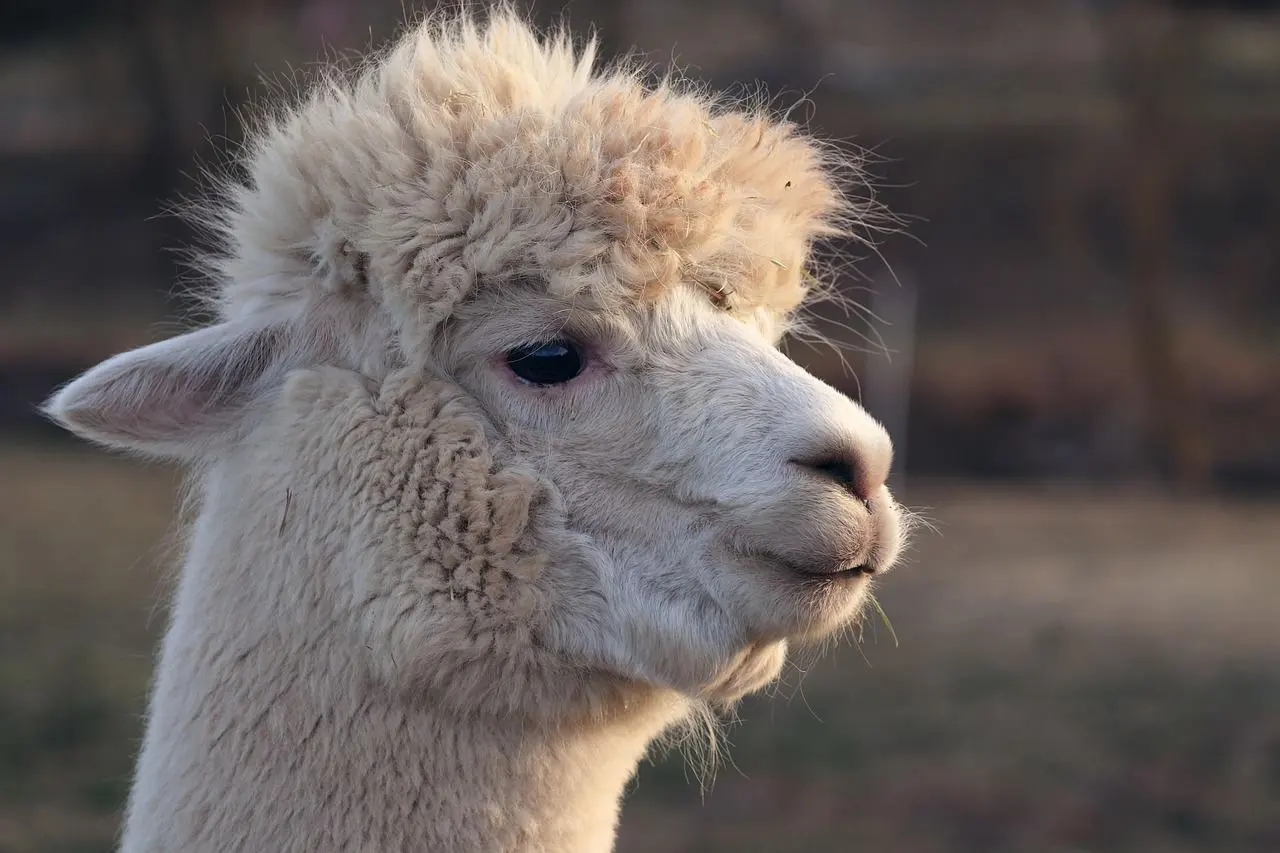
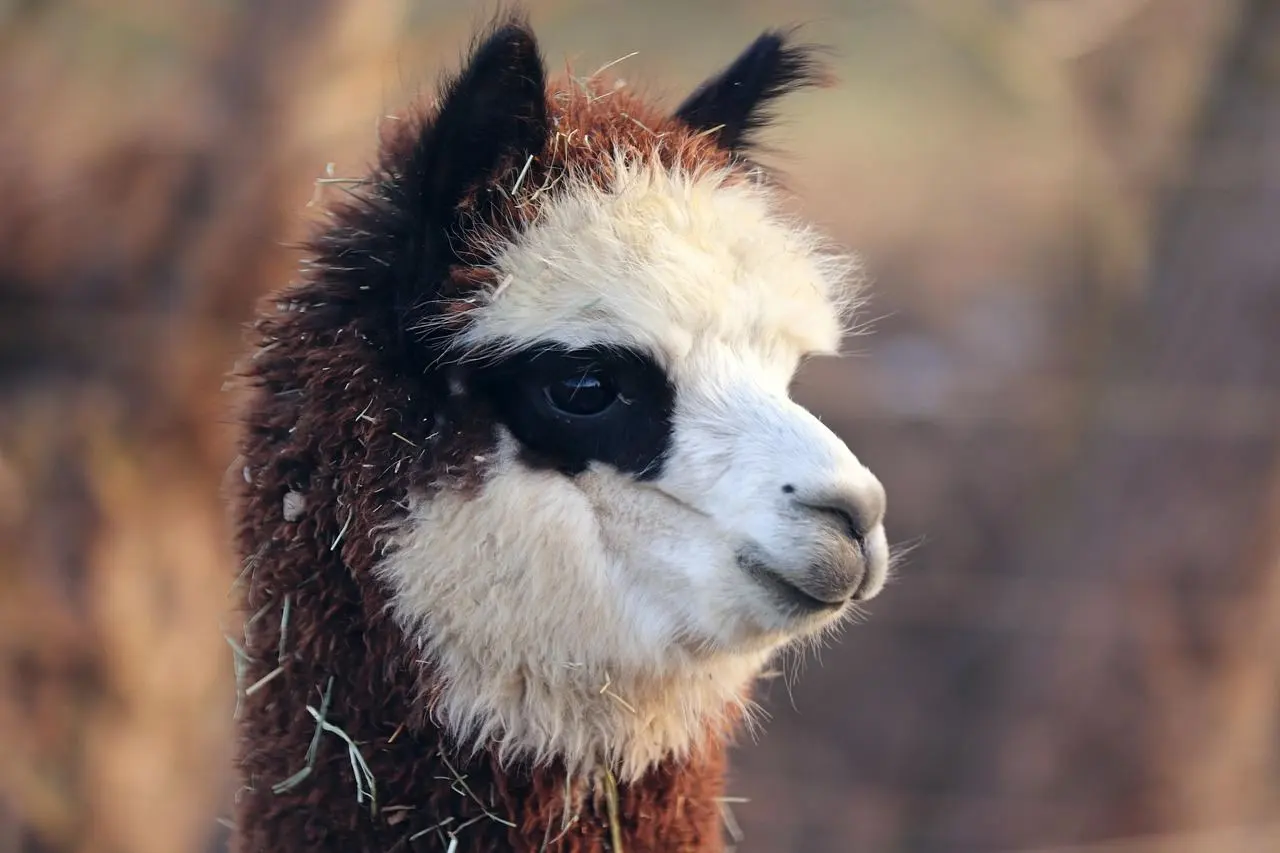
Alpacas, like sheep, carry thicker awn hairs among the undercoat. These long straight hairs keep the fine coat from matting, which is why the source says alpacas should not be brushed: brushing would destroy the undercoat structure, as the Wikipedia entry explains.
Awn hairs are much coarser than the fine undercoat. They can be carded easily, but they can also be sorted out.
Spinning, washing and finishing
Once carded, the strains are ready to be spun into yarn with a spinning wheel. The yarn can then go on to knitting or be woven, depending on the fiber type.
In the source’s sequence, the wool is washed after spinning to remove impurities. Alpaca wool has almost no wool grease (lanolin), which the source says makes it easy to clean.
After that the wool is ready for sale as knitting wool or for further processing. For care once you own a finished piece, see this guide on how to wash alpaca wool.
Labels on finished yarn can be confusing, and the baby alpaca wool meaning page looks at one common term.
Do Huacaya and Suri follow the same route?
Mostly yes, but the fiber types suit different end uses. Huacaya is the most common type, while Suri makes up less than 10% of the South American alpaca population, according to the Wikipedia article.
- Both types can be used in the worsted milling process with light weight yarn or thread.
- Huacaya can also go through a woolen process and be spun into various weight yarns.
- Huacaya has natural crimp, giving a naturally elastic yarn well suited to knitting.
- Suri has no crimp, so it is a better fit for woven goods.
A short history of alpaca in the mills
Alpaca fiber reached industrial spinning slowly. Alpaca yarn was apparently spun in England for the first time about 1808, but the fiber was condemned as unworkable, and a second attempt in 1830 met the same verdict, per the source.
The source blames the style of fabric the yarn was woven into. About 1836, cotton warps arrived in the Bradford trade, and the true qualities of alpaca could finally be judged. Titus Salt, then a young Bradford manufacturer, went on to use it successfully.
Today, in the United States, groups of smaller breeders have formed fiber co-ops to make manufacturing alpaca products less expensive, as the same page reports.
Frequently asked questions
Why shouldn’t an alpaca be brushed?
Show answer
The coarse awn hairs hold the fine undercoat in order. Brushing disturbs that arrangement and damages the coat’s structure.
Is alpaca harder to clean than sheep wool?
Show answer
The source describes it as easy to clean because it holds almost no lanolin. A separate guide on washing finished items is linked above.
What happens to the coarse guard hair?
Show answer
It is often taken out before spinning. It can also stay in, because awn hairs card easily, though they can be sorted out too.
What is a fiber co-op?
Show answer
It is a group of small breeders who pool their efforts, with the aim of lowering the cost of turning fleece into products.
For health questions about shearing, who should I ask?
Show answer
Consult a veterinarian experienced with camelids about any health concern, diagnosis or emergency. This guide covers fiber processing only.