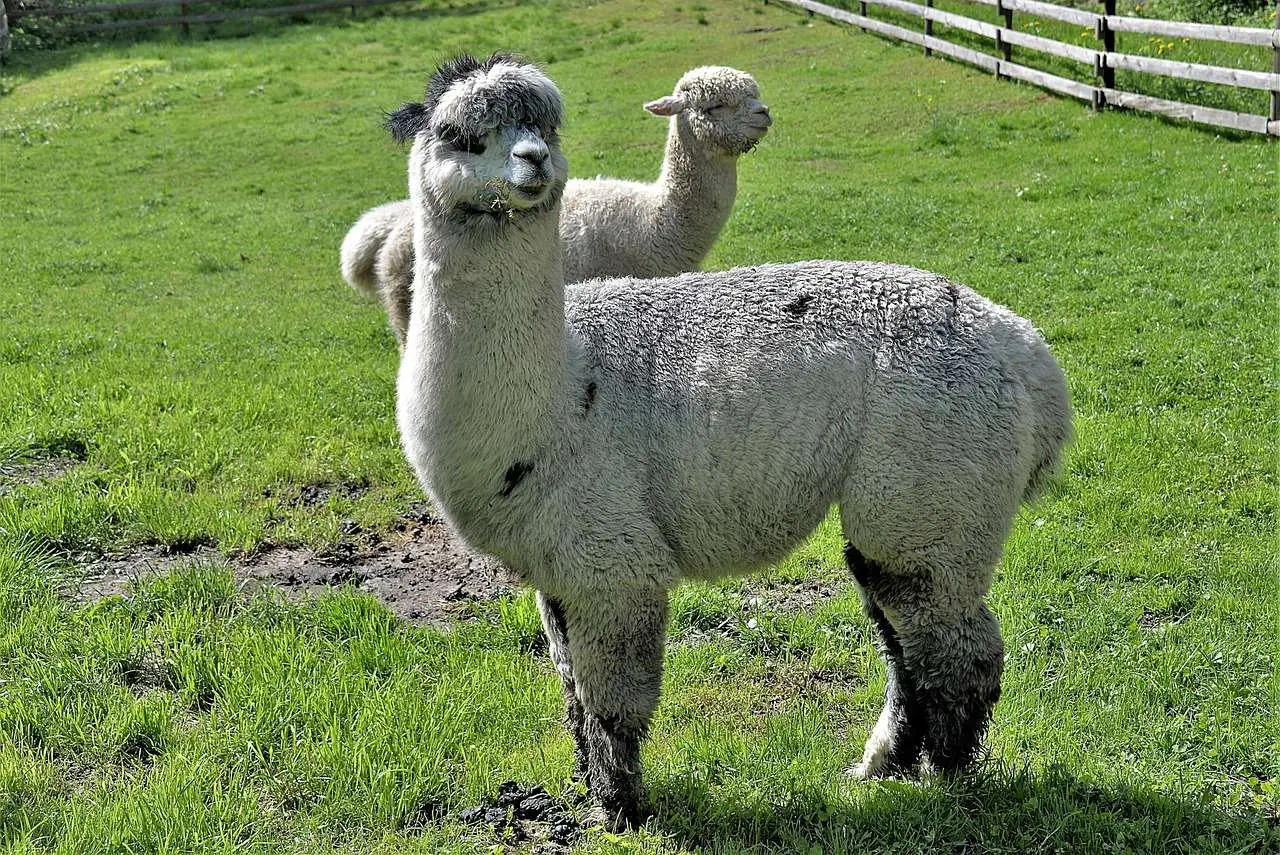
Planning a paddock and asking how much land do alpacas need? Usually only a few animals per acre, and the quality of your pasture, not the acreage alone, sets the real limit.
This guide is part of our alpaca care series on everyday husbandry.
| Item | Value |
|---|---|
| Alpacas per acre of irrigated pasture (US extension guidance) | 5 – 10 alpacas |
| Practical UK stocking guideline | approximately three alpacas per acre |
| Adult alpaca weight | between 130 and 200 pounds |
| Daily dry matter intake | about 2% of animal weight |
| Minimum interior fence height | at least 4 feet |
| Typical lifespan | about 15 to 25 years |
The figures come from the UC ANR small acreage guidance and a UK alpaca farming guide. They can change, so check the source before you rely on them.
What extension guidance says about stocking rates
The University of California’s small acreage guide says that, depending on pasture quality, 5 – 10 alpacas can be grazed per acre of irrigated pasture, as the UC ANR page explains. It also warns that unirrigated ground will not carry that many animals.
Treat that range as a ceiling for good, watered grass rather than a target. A UK alpaca guide suggests a more cautious practical guideline of approximately three alpacas per acre, planned around winter stocking rates instead of peak summer growth.
Several things push your safe number up or down:
- Irrigation: watered pasture supports more animals than dry, unirrigated ground.
- Pasture quality: thin or weedy grass carries fewer animals than a dense, well-managed sward.
- Season: winter growth, not the summer flush, decides what the land can hold year-round.
- Parasite pressure: crowded paddocks make worm burdens harder to control.
Adult alpacas typically weigh between 130 and 200 pounds and stand about 3 feet tall at the shoulder, according to UC ANR. They are smaller than llamas and eat less per head, but each animal still needs grazing, shelter and room to move.
Why winter grass and parasites set your limit
Summer grass can fool you. The UK guide says to plan around the lean season, because too many animals strain the pasture, raise the parasite burden and harm long-term welfare.
Feed and water scale with body size. UC ANR puts feed intake at about 2% of animal weight in dry matter, plus about 1 gallon of water per hundred pounds of animal weight each day.
Heavy worm loads, thin animals or poor pasture are health matters, not just land-planning ones. Ask a veterinarian experienced with camelids about worming, body condition and any concern about your herd.
How to work out your own stocking rate
The University of Alaska Fairbanks Cooperative Extension offers a grazing calculator that includes a mature alpaca among its animals. The UAF page says you must know your acreage, the forage available and the share of forage you will allow the animals to graze.
- Measure the acres you can actually graze, leaving out buildings, yards and boggy corners.
- Estimate how much dry matter your pasture grows per acre, asking local extension staff if you are unsure.
- Choose the percentage of that forage the animals may eat, so the rest protects the grass.
- Read the result for a mature alpaca, then compare it with the winter-based guideline above and go with the lower number.
The page calls the calculator an exploratory tool, so treat the answer as a starting estimate. If you struggle to settle on a rate, it suggests contacting a local state extension agent, as the UAF page notes.
Space for shelter, fencing and handling
Land is more than grass. Camelids need natural or constructed shelter, and in mild climates a three-sided shed is sufficient, according to UC ANR. The same page says they need shade in spring and summer and protection from wind in winter.
The UC ANR guidance says interior fences should be at least 4 feet tall, and recommends woven wire, no-climb wire, wooden rail or high tensile fencing instead of barbed wire. Our guide to alpaca fencing covers the options in more detail.
Camelids need annual vaccinations, routine worming, toenail trimming and shearing, per UC ANR. Set aside a safe, enclosed handling area for those jobs, and read our guide to alpaca toenail trimming for the routine itself.
Is a small plot enough?
Sometimes. The UK guide says a small group of three alpacas can sometimes be kept on one acre, ideally split into two paddocks so grazing can be rotated. It adds that smaller acreages can work with careful grazing management and realistic herd numbers.
The catch is that alpacas are herd animals and should not be housed alone, as UC ANR states. Plan your land for a small group, not a single animal.
Alpacas live about 15 to 25 years according to the same UC ANR page. Lay out paddocks you can keep resting and rotating for the long term.
Frequently asked questions
Can I keep one alpaca on a small paddock?
Show answer
It is not a good idea. Alpacas are social, and the UK guide says they must be kept in compatible same-sex groups, so budget land for companions from the start.
Does dry pasture hold as many alpacas as irrigated pasture?
Show answer
No. The irrigated range quoted by UC ANR is not meant for unirrigated ground, so start with fewer animals there and watch how the grass recovers.
Who can help me set a stocking rate for my own land?
Show answer
A local state extension agent is the suggested contact if the numbers are hard to pin down, according to the UAF Cooperative Extension calculator page. For any animal health question, speak to a veterinarian experienced with camelids.
Does the position of salt and feeders affect how the pasture is used?
Show answer
It can. UC ANR recommends keeping salt away from water to spread animal impact around the pasture, and says loose granular salt works better than blocks.