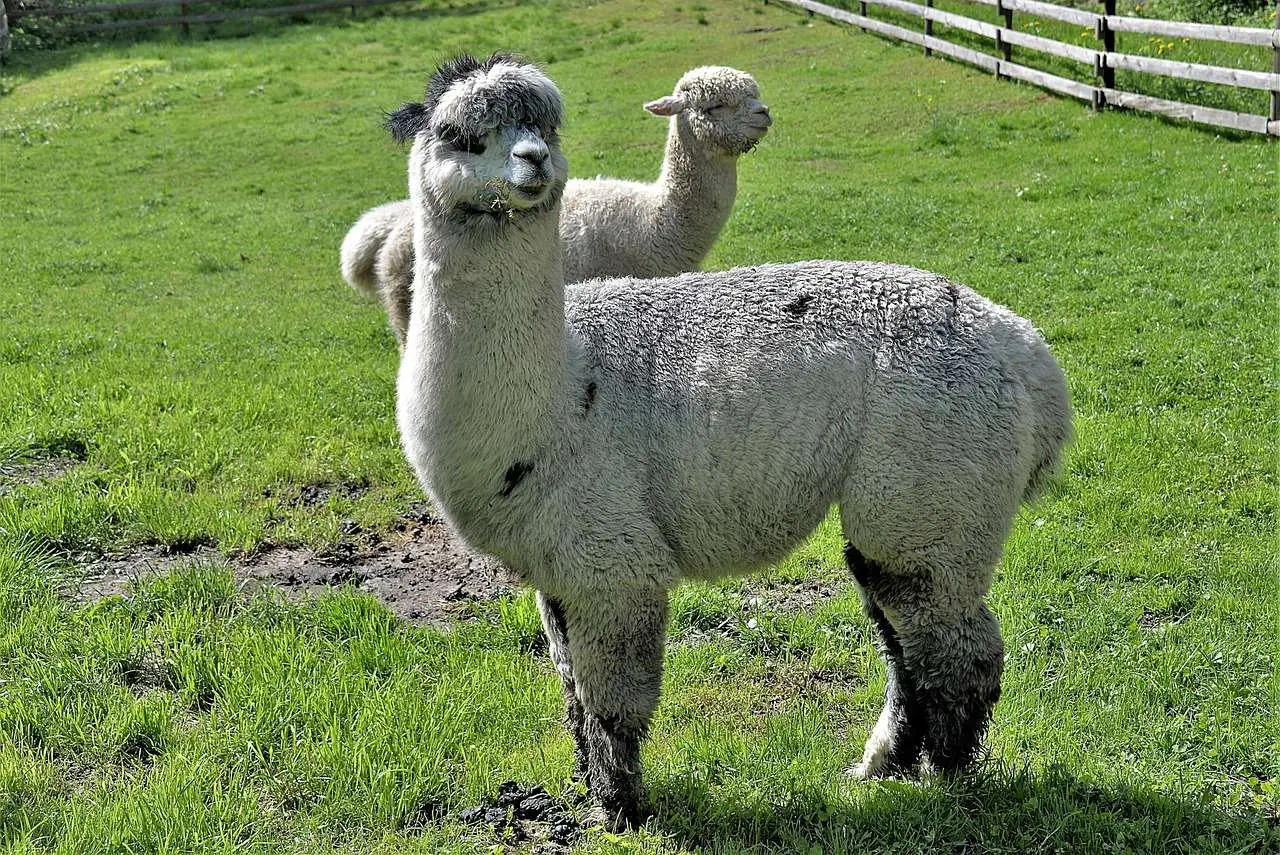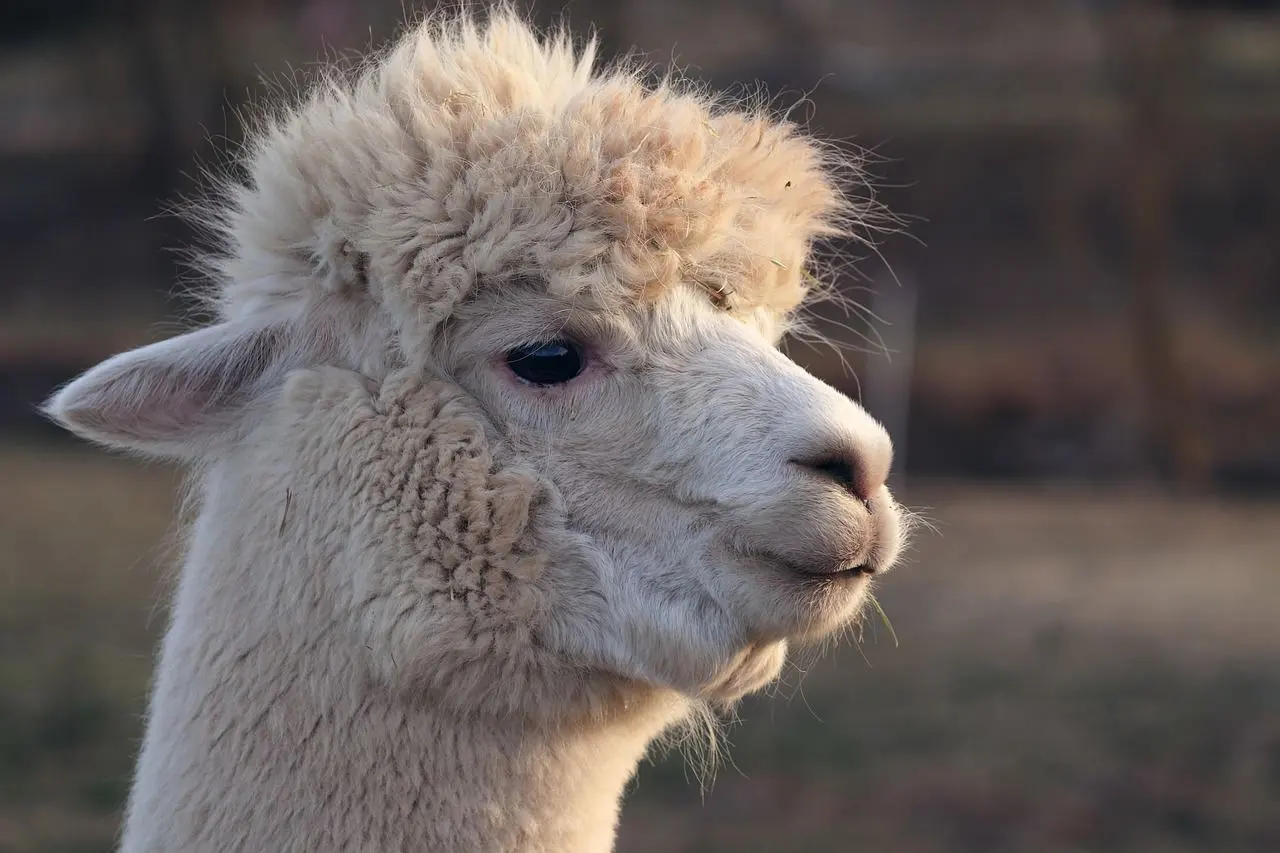
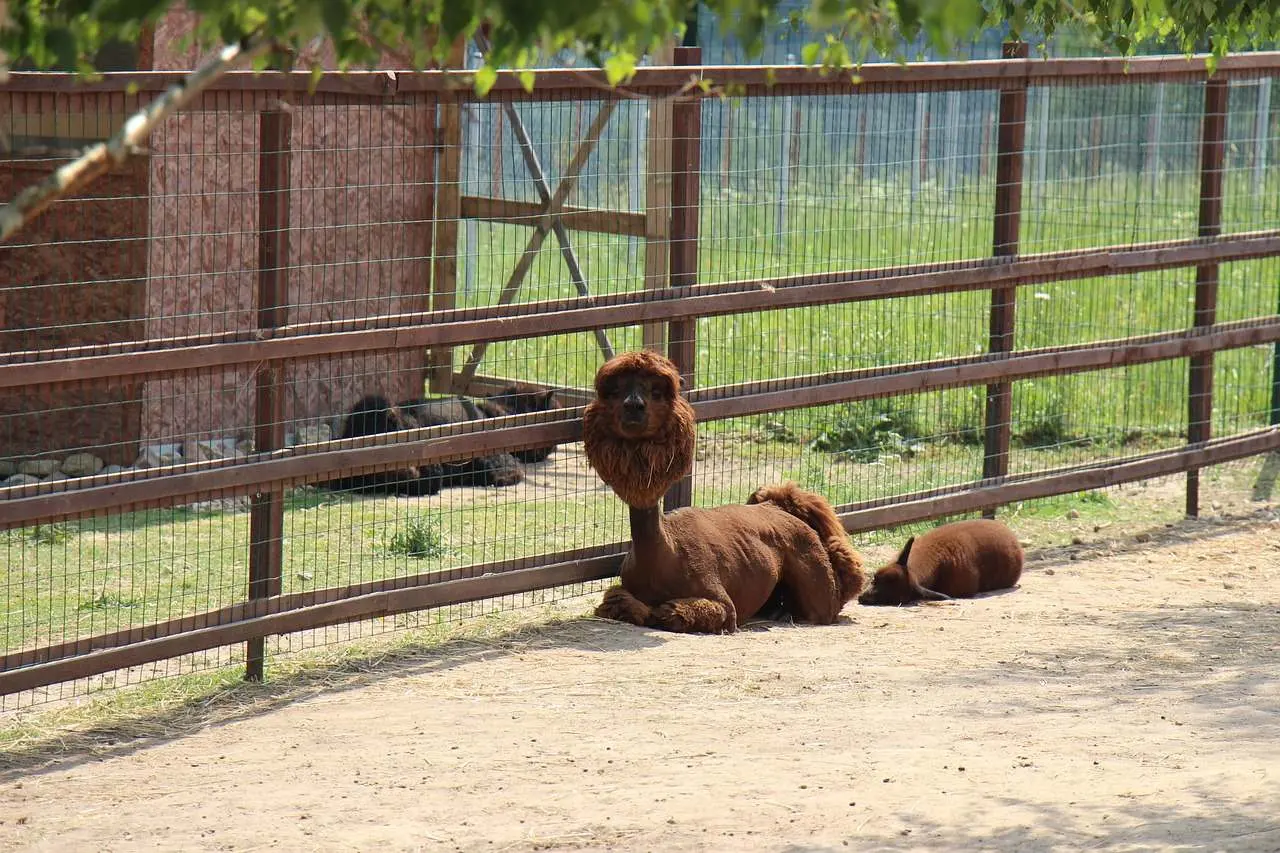
Worried your paddock won’t hold your herd? Good alpaca fencing is tall, no-climb woven wire or plank, backed by regular checks. Here is what works and what to avoid.
This guide is part of our wider coverage of alpaca care, and it draws on extension guidance for livestock fencing.
| Item | Value |
|---|---|
| Recommended minimum height, woven or plank fence, alpacas and llamas | 60 inches |
| Recommended mesh for that height | 2″x4″ “no-climb” mesh |
| Post spacing for most animals | About 10 feet apart |
| Post depth | About half the fence height below ground |
| Livestock panels, approximate cost | ~$1.70-$2.40/ft |
These figures come from WSU Extension’s farm fencing guide. Prices and recommendations can change, so check the source before you rely on them.
What does an alpaca fence actually have to do?
A fence has two jobs: it keeps animals in, and it keeps trouble out. WSU Extension calls fencing one of the most important and costly investments in livestock management, so it pays to plan before you buy a single post.
The guide lists alpacas among the species that each bring “unique strength, size, and behavior considerations”. It also stresses that predators matter, since coyotes, cougars, weasels and raptors all call for different deterrence strategies.
Start by writing down what you are keeping out as well as what you are keeping in. Your answer shapes the height, the mesh and whether you add a hot wire.
Which fencing materials work best?
The guide compares three approaches. Each has trade-offs you can weigh against your budget and your site.
- Hot wire (electric): lower installation cost, flexible and easy to expand, but it needs regular maintenance and vegetation control.
- Woven wire or plank: durable with lower long-term upkeep, but a higher initial cost and more labour to install.
- Mixed systems: physical fencing combined with hot wire for strength plus behavioural deterrence.
Woven wire or planked fences are described as ideal for animals that test fences or for long-term enclosures. Once installed, they give a strong physical barrier and need less upkeep.
Height, mesh and posts
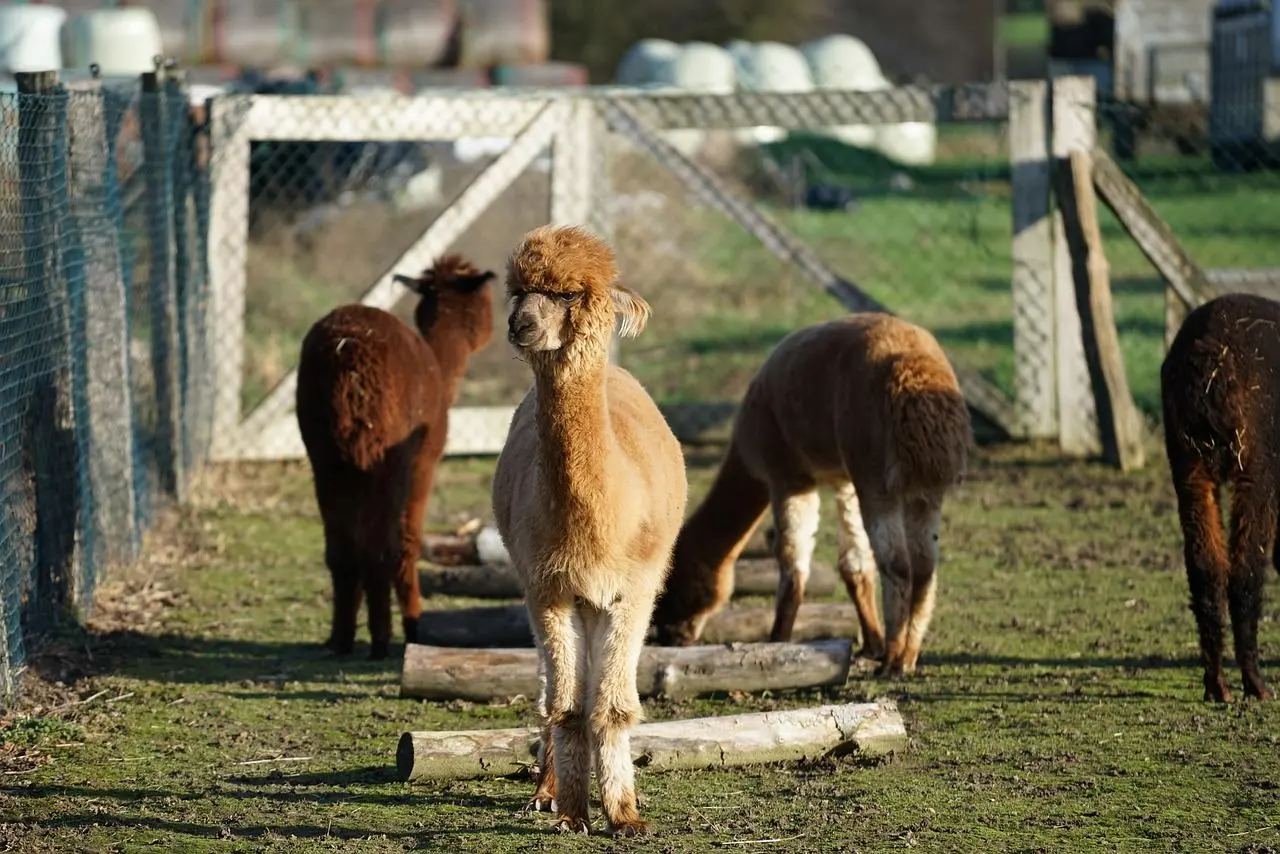
For alpacas and llamas, the guide recommends a minimum of 60 inches with 2″x4″ “no-climb” mesh. For comparison, it suggests 48 inches of woven wire for sheep and goats, and 54 inches for cattle. Details are in the WSU Extension guide.
Posts give the structure its strength. The same guide puts them about 10 feet apart for most animals, set about half the fence height below ground.
Corner and end braces anchor the fence and let you tension it properly. A double H-brace is the most stable and long-lasting, while a single H-brace is standard for most installations.
The guide also advises drain rock instead of concrete around posts, which avoids moisture damage and makes replacement easier.
Using electric wire with care
A hot wire gives a brief shock when touched, which teaches livestock to avoid it. Training is key, so begin in a secure area where animals can learn without escaping.
Grass and debris can short a line, which is why mowing under the fence is necessary. The guide also warns that goats and sheep with thick fleece may ignore a mild shock. It does not say the same of alpacas, so treat your own herd’s response as something to watch rather than assume.
Cheaper options and what to avoid
When standard materials are out of reach, the guide names a few alternatives. Livestock panels are durable and easy to install at roughly ~$1.70-$2.40/ft, according to the WSU Extension source.
- Pallets: free, but they require frequent posts.
- Reclaimed wood or downed trees: labour-intensive but low-cost.
- Hot wire alone: cheaper to put up, yet it depends on upkeep and a working charge.
Whatever you choose, the fence still has to match your species and predators. A bargain that fails a predator test is no bargain. Fence layout also links to housing, so read about alpaca housing and shelter before you finalise a design.
Building and maintaining the fence
The extension guide breaks construction into a short sequence:
- Plan and mark the fence line, keeping it straight with stakes and twine.
- Install corner braces and posts.
- Roll out and attach the fencing, wrapping around corner posts.
- Stretch it until taut but not overstressed.
- Hang gates with proper hinge placement and clearance.
Maintenance matters as much as the build. Walking the line regularly is the simplest habit:
- Look for sagging, digging, leaning posts or damage.
- Tighten slack wire as needed.
- Test electric fences, because a weak charge often signals a short from vegetation or debris.
- Patch holes quickly with panels or spliced fencing.
- Replace compromised posts promptly.
The size of your paddock also affects how much fence you need to build, so it helps to understand how much land do alpacas need before you mark any lines. If an animal is ever injured on a fence, contact a veterinarian experienced with camelids.
Frequently asked questions
Is electric fencing enough on its own?
Show answer
The guide describes mixed systems as the best of both worlds, pairing a physical barrier with a hot wire. Relying on wire alone leaves you dependent on a working charge and clear vegetation.
Why does the mesh pattern matter?
Show answer
A “no-climb” mesh is the style the guide pairs with the recommended height for alpacas and llamas. Its purpose is to stop animals from using the fence as a ladder, and it helps limit predator access.
Should I set posts in concrete?
Show answer
The source suggests drain rock instead. Concrete can trap moisture around the post, and rock makes a later replacement easier.
How often should I check the fence?
Show answer
The guide recommends regular walks along the line, though it gives no fixed schedule. Check after storms or when you notice an animal behaving differently near a boundary.