You want your alpacas to eat well without guesswork. So, what do alpacas eat? Mostly pasture and hay, with fresh water and loose minerals alongside, according to extension guidance.
This page sits within the wider guide to alpaca care, which covers husbandry beyond feeding.
| Feeding item | Value |
|---|---|
| Dry matter intake | 1.8-2.0% of body weight |
| Protein, maintenance | 8-10% of diet dry matter |
| Protein, pregnancy and lactation | 12-14% protein |
| Fibre | 20-30% of diet dry matter |
| Hay on dry lot | 3-5 pounds a day |
| Water, minimum | 5 litres per day |
These figures come from Rutgers Cooperative Extension and the NSW Department of Education. Figures can change, so check the sources before you rely on them.
A high-fibre browsing diet
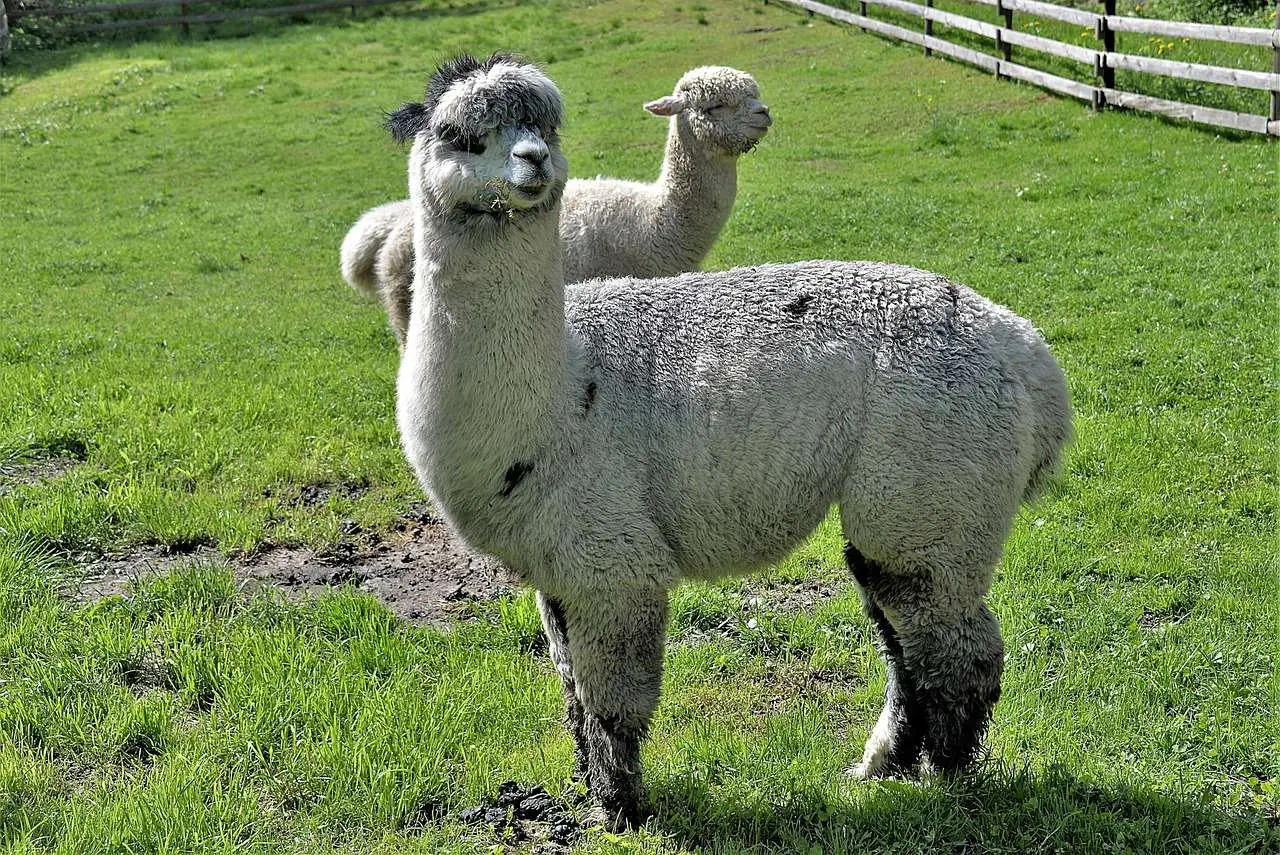
Alpacas are browsing animals that eat pasture and other vegetation types, according to the NSW Department of Education. They thrive on a high fibre, low protein diet.
Rutgers describes camelids as hornless, cud-chewing ruminants, and says their nutritional requirements are similar to those of sheep. Where a requirement is unknown, sheep data have been used to fill the gap, as the Rutgers fact sheet explains.
The NSW guide makes a related point: alpacas are larger than sheep but more efficient food converters, so they need similar feed rations to sheep. In practice that means a plain, fibrous diet rather than rich feed.
Pasture and hay: the core of the diet
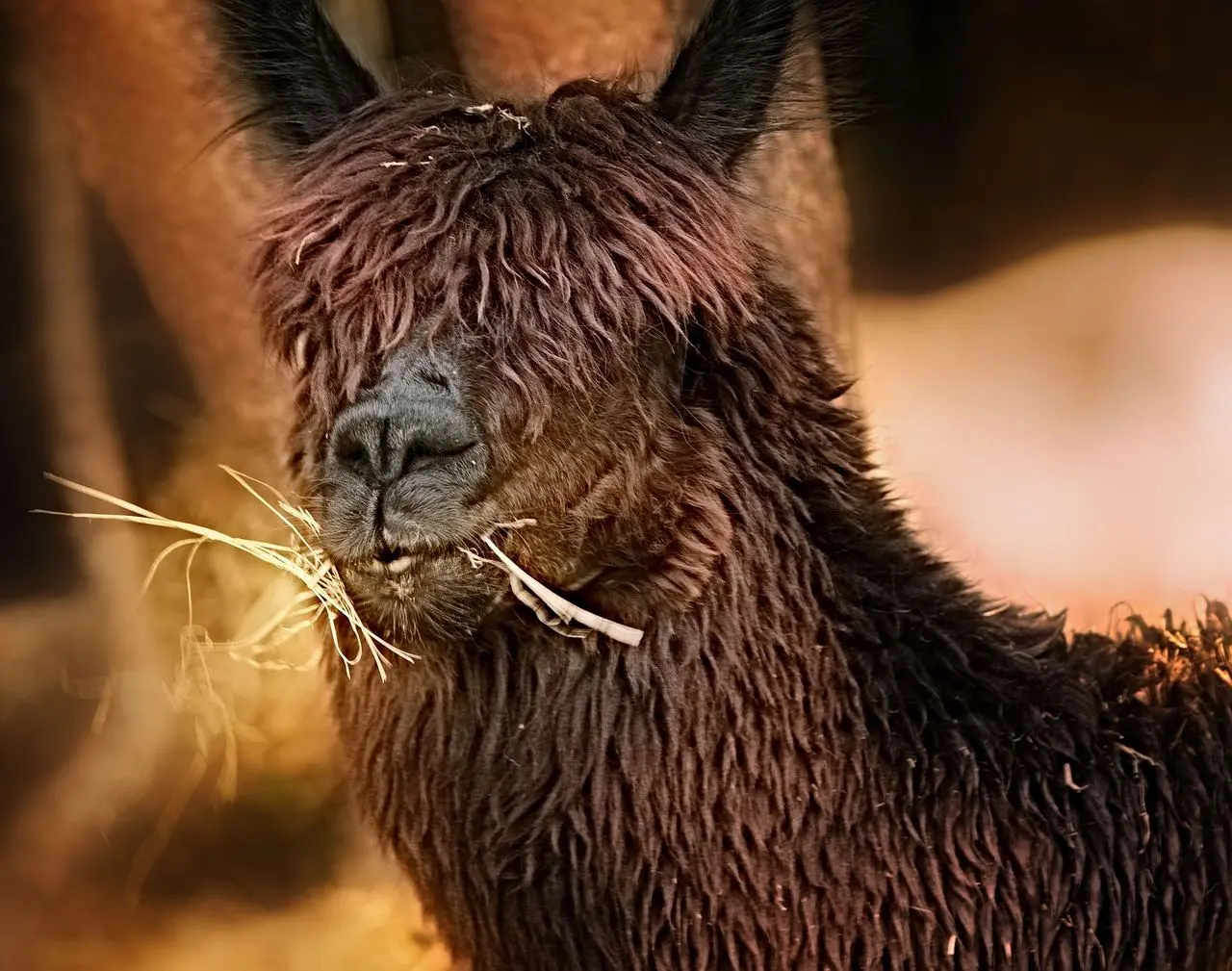
Pasture and hay should make up the bulk of the diet, and fresh water is necessary, says Rutgers. Everything else is an addition to that base.
Grazing is not always enough. The NSW guidance for school animals says alpacas will usually need supplementary feeding when there is too little grazing opportunity.
Without pasture, on a dry lot, camelids may eat 3-5 pounds of hay a day, according to Rutgers. Alpacas weigh about 100 to 175 pounds and stand about three feet at the withers, so the amount depends on the individual animal’s size.
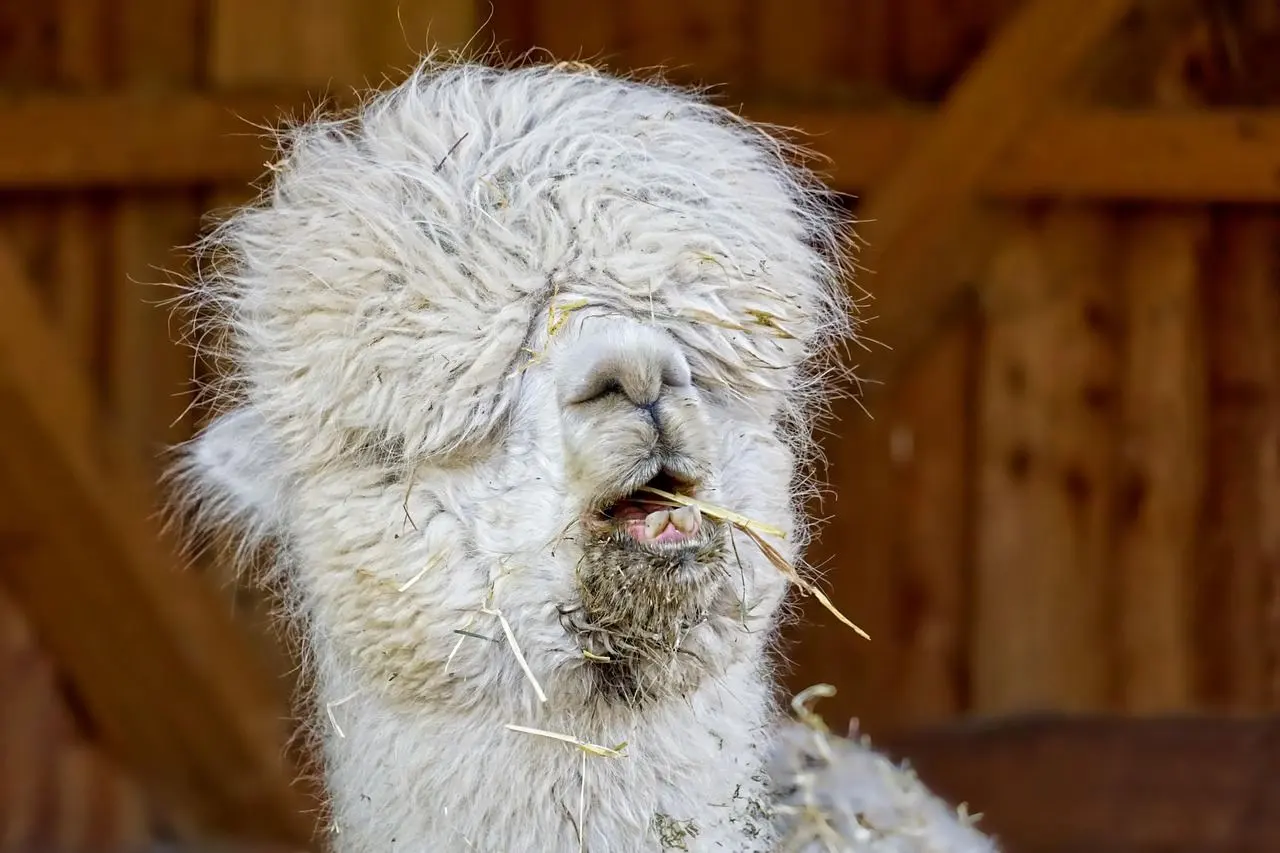
How much do alpacas eat?
Rutgers gives feed intake as equivalent to 1.8-2.0% of body weight in dry matter, which is the feed weight counted without its water. Its fact sheet places that figure alongside the growing stage, which runs from birth until three years of age.
Adults are treated differently. Animals over three years of age that are not working, and females in the first two trimesters of pregnancy, are fed to meet maintenance needs only, per Rutgers. Maintenance means keeping body condition and weight steady.
The NSW guide says feed quantity and quality should follow bodyweight or body condition score, plus extra demands from growth, pregnancy, lactation and exercise. It adds that this can be checked by weighing alpacas and using a condition scoring system regularly.
Protein and fibre by life stage
Rutgers breaks the diet down by life stage, using percentages of diet dry matter:
- Maintenance: 8-10% protein (Rutgers).
- Pregnancy and lactation: 12-14% protein (Rutgers).
- Growth: 13-14% protein, the highest requirement (Rutgers).
- Fibre: 20-30% at every stage (Rutgers).
Rutgers notes that llama and alpaca requirements are similar, with amounts differing because of body weight. For questions about a particular animal, it suggests checking with your local county extension agent.
Water, salt and minerals
The NSW guide says alpacas require at least 5 litres of water each per day. Rutgers instead puts normal daily intake at about 4 liters per hundred pounds of body weight. The two use different yardsticks, so treat the NSW figure as a minimum.
Needs rise during lactation and shortly after weaning, as the NSW guidance explains. It names automatic waterers as the preferred and most efficient way to supply water in paddocks or yards.
For minerals, Rutgers says loose salt and minerals are easier for these animals to lick than block versions.
Feeding plans, health and housing
Steady feeding matters over a long life, since Rutgers gives an alpaca life span of about 15-25 years in its fact sheet. The wider picture of longevity is covered in the guide to alpaca lifespan.
Where animals eat and drink also shapes how a paddock or yard is laid out. Those layout questions are covered in the guide to alpaca housing and shelter.
This page is general education, not veterinary advice. Weight loss, poor condition, medication, dosing or any emergency should go to a veterinarian experienced with camelids.
Frequently asked questions
Do alpacas eat only grass?
Show answer
Not strictly. They browse a range of vegetation, and hay sits next to pasture as a main part of the ration.
Do alpacas need a lot of protein?
Show answer
Adults at maintenance need a modest level. Requirements climb for pregnant, nursing and growing animals, as the life-stage list above shows.
Are salt blocks suitable for alpacas?
Show answer
Rutgers favours loose salt and minerals because licking them is easier. A block can be harder for an alpaca to use.
Can alpacas be fed without much pasture?
Show answer
Yes, with extra feeding. The NSW guidance expects supplementary feed where grazing is short, and Rutgers describes hay on a dry lot. Ask a camelid veterinarian to check the plan for your animals.